Australia/Israel & Jewish Affairs Council

Syria

YOU ARE IN: Home Page > Topics > Syria

US clamping-down on terror supporters and war criminals

US clamping-down on terror supporters and war criminals Author: Daniel Meyerowitz-Katz Categories: America, Holocaust/ War Crimes, Iran, Sudan, Syria, Terrorism, Updates    

After frequent calls on this blog for some action against Sudanese President Omar Bashir, it is welcome news that the US Congress is committing to halt aid to any country that hosts the indicted war criminal.

A US House of Representatives press release reports that the House Appropriations Committee has adopted an amendment to the State and Foreign Operations Appropriations bill for 2013 to this effect, proposed by Representative Frank Wolf...

Jewish refugees - Addressing historical injustice as a key to reconciliation

Jewish refugees - Addressing historical injustice as a key to reconciliation Author: Or Avi-Guy Categories: Egypt, Israel, Middle East, Palestinians, Syria, Updates    

Palestinian refugees and the claims made of "right of return" for them have long been a major issue within the debate over a 'just solution' to the Israeli-Palestinian conflict. The claimed "right of return'" is still seen as a core obstacle to overcome in any future peace negotiations. Yet the refugees question is even more complex. Palestinian refugees actually represent the smaller of the two refugees groups created by the regional conflict between the Arab countries and Israel - the larger group being Jewish refugees from Arab and Muslim countries.

The voices of these Jewish refugees, sadly, have hardly ever been heard or are generally too quickly dismissed. Listening to these voices could potentially shed light and new perspectives not only on the refugees question, but also on the nature and history of the regional context of the conflict. It might even promote reconciliation.

Syria after the Annan Plan

Syria after the Annan Plan Categories: Syria, Updates    

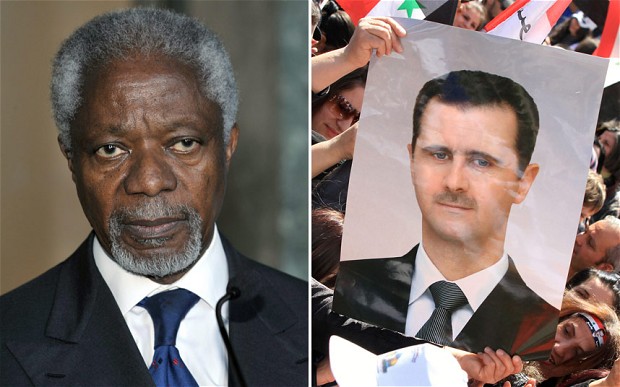
Today's Update looks at the options for dealing with the ongoing violence in Syria in the wake of the apparent failure of the ceasefire put forward by former UN Secretary-General Kofi Annan as part of his plan to settle the conflict and halt the killing (with at least 23 people killed on Tuesday).

First up is a good report on the aftermath of the Annan plan, consisting of numerous quotes from knowledgeable on all sides , written by Neil McFarquhar of the New York Times. He finds there is general agreement that the plan has failed, but little sense of what might come next from various quarters, and still very little appetite for any serious intervention from Western policymakers - few of whom, it seems clear, ever expected the plan to succeed in the first place.

AIR
 Conviction of Charles Taylor - A warning for Assad and Bashir?

Conviction of Charles Taylor - A warning for Assad and Bashir? Author: Sharyn Mittelman Categories: Africa, Syria, Updates    

The conviction of Charles Taylor, the former president of Liberia and once powerful warlord, was a landmark ruling by an international tribunal - the Special Court for Sierra Leone. It was the first guilty verdict for a head of state in the history of UN war crimes courts.

Taylor's verdict could ostensibly be a warning for Syrian President Bashar al-Assad and Sudan's President Omar Al Bashir, who are both accused of committing atrocities.

US Sanctions Telecommunications Companies in Syria and Iran

US Sanctions Telecommunications Companies in Syria and Iran Author: Sharyn Mittelman Categories: America, Iran, Syria, Updates    

US President Barack Obama has announced that the US will apply new sanctions to prevent companies from using technology that help repressive regimes in Syria and Iran target dissidents.

The new US sanctions will target Syrian and Iranian government agencies and officials who directed the surveillance operations, as well private companies.

Another failed peace plan for Syria?/ Negotiating with Iran

Another failed peace plan for Syria?/ Negotiating with Iran Categories: International Security, Iran, Syria, Updates    

This Update deals primarily with the apparent failure of the peace plan for Syria negotiated by UN envoy Kofi Annan, which appears to have failed after a promised pullout of  Syrian forces from major towns by Tuesday appears to have largely not occurred (though relative quiet is reportedly currently in place across the country.)

First up is Syrian opposition figure and analyst Radwan Ziadeh who argues it was absurd to have expected Syrian President Assad to have complied with the Annan peace plan given his track record. He points particularly to repeated promises by Assad to both Turkey and the Arab League which were not kept, and seemed to be simply a diversion.

What about Syria's WMD?

What about Syria's WMD? Author: Ahron Shapiro Categories: Syria, Updates    

In my review of Israeli policy in regard to Syrian unrest which was published on Tuesday on ABC's The Drum.

I noted that "the one issue which might prompt Israel to come off the sidelines" in Syria's Civil War is the possibility that Syria's massive "arsenal of of some of the world's most deadly chemical weapons" might "find their way into the hands of terrorist groups." I also noted that this was not simply a problem for Israel, but a danger to the whole free world.

For those interested in more on this significant danger, I call your attention to a survey of Syria's WMD threat, by James P. Farwell published late last week in The National Interest.

Updates
Israel's silence on Syria isn't a conspiracy

Israel's silence on Syria isn't a conspiracy Author: Ahron Shapiro Categories: Israel, Op-eds, Syria    

The question has arisen over Israel's position on the appalling situation in Syria, where the lives of over 9,000 civilians have been claimed in a crackdown on protesters and an insurrection by opposition groups.

Some commentators have unfairly interpreted the Israeli government's comparative silence over the bloodshed compared to other regional and Western countries as cold indifference, others as calculated.

Bizarrely and contradictorily, Israel has been criticised by some commentators for wanting to keep the current government in place and by others for seeking to topple it.

Strange Australian commentary on the UN's controversial "peace plan" for Syria

Strange Australian commentary on the UN's controversial "peace plan" for Syria Author: Daniel Meyerowitz-Katz Categories: Australasia, Media/ Academia, Syria, United Nations, Updates    

The Syrian Government's decision to accept UN and Arab League envoy Kofi Annan's six-point peace plan has been met with a lot of scepticism to say the least. A number of experts have been predicting that the initiative would only paper-over the Assad regime's continued violence and that there would be negative consequences felt in Syria as a result.

Another by-product of the issue has been some rather strange commentary emerging from Australia. Anthony Billingsley, a lecturer at the University of New South Wales, has written his thoughts about the Annan plan on Australian academic blog site The Conversation. His reasoning is a little difficult to follow – in more than one instance, his assessment of the geopolitics seems either misinformed or contradictory, particularly in regards to the American and Israeli role in the Syrian uprisings (emphasis added)...

Essay: In Retrospect

Essay: In Retrospect Author: Amos Yadlin Categories: Egypt, Middle East, Syria, Tunisia    

Since the outbreak of the protests in Tahrir Square, which were led by liberal, secular youth and which led to the ouster of Egyptian President Husni Mubarak, a lot of water has flowed through the Nile. An ailing Mubarak is on trial, possibly for his life, and his declaration that only his regime could block the rise of the Islamists turns out to have been keen and precise. Islamist political parties - the Muslim Brotherhood and the Salafists - won 75% of the vote in free, fair elections, while the liberal secular youth have been sidelined in terms of political influence in Egypt. The army, which has not given up the reins of government for even a moment, has teamed up with the Islamists, makes concessions in every confrontation with "the street", and retreats further and further from what it declared was its first priority: to promulgate a constitution that would ensure basic rights and a stable democracy.

Assad's Email, Iran and the Palestinians

Assad's Email, Iran and the Palestinians Author: Ahron Shapiro Categories: Documents, Iran, Palestinians, Syria, Terrorism, Updates    

As has been widely reported in the Australian press today, on Wednesday the Guardian went public with a trove of messages that they had obtained which purportedly had been mined out of Syrian President Bashar Assad's personal email account.

What was less widely reported was that, as a key strategy, in the emails the Iranians told the Alawite Assad to shore up his image among the country's majority Sunni Muslim population by fashioning himself as an uncompromising opponent of concessions to Israel and as a defender of Jerusalem.

 UN Commission on the Status of Women singles out Israel for condemnation

UN Commission on the Status of Women singles out Israel for condemnation Author: Sharyn Mittelman Categories: Anti-Zionism, Egypt, Iran, Israel, Palestinians, Syria, United Nations, Updates    

The United Nations' Commission on the Status of Women (CSW) has done it again - in its annual session it condemned only one country - Israel, while ignoring the human rights violations of women around the world, including especially the current crisis in Syria - where women are being raped and murdered...

Egypt to end Camp David?/ Syria Again

Egypt to end Camp David?/ Syria Again Categories: Egypt, Syria, Updates    

This Update deals with recent developments in Egypt, and especially the passage of a unanimous resolution by Egypt's Islamist-dominated parliament demanding a severing of all ties with Israel on Monday.

Israeli strategic analyst Jonathan D. Halevi looks at the implications of the resolution in more depth, including all of its provisions -  its statement that Israel will "never" be anything but an enemy, full support for Palestinian "armed resistance" against Israel, demands for a total boycott of Israel and a severing of all ties, an implied demand for an Egyptian nuclear capability and its rejection of the Israeli-Palestinian peace process...

Another child's death falsely blamed on Israel as leaked emails reveal Assad's scapegoating

Another child's death falsely blamed on Israel as leaked emails reveal Assad's scapegoating Author: Daniel Meyerowitz-Katz Categories: Iran, Israel, Media/ Academia, Palestinians, Syria, Updates    

Just days after being exposed for fraudulently blaming the accidental death of a 15-year-old boy on an "Israeli airstrike", Hamas officials have again attempted to implicate Israel in the death of a Gaza youth -- this time, seven-year-old Baraka al-Mughrabi. Just after Mughrabi passed-away last night, reports started emerging that he had been killed by an Israeli strike.

Not long after, however, these remarks were retracted as the truth of his death emerged...

UNESCO half-heartedly condemns Syria, but leaves it on its Human Rights bodies

UNESCO half-heartedly condemns Syria, but leaves it on its Human Rights bodies Author: Or Avi-Guy Categories: Syria, United Nations, Updates    

On March 8, UNESCO (United Nations Educational, Scientific and Cultural Organisation) published a condemnation of human rights violations perpetrated by Assad's regime in Syria. The resolution was passed with 35 votes in favour, and 8 opposed, making UNESCO the third UN agency (after the General Assembly and the Human Rights Council) to address the human rights situation in Syria. However this condemnation seems inconsistent with UNESCO's treatment of Syria, since Assad's representatives are still sitting in two UNESCO committees dealing with human rights issues: the Committee on Conventions and Recommendations and the Committee on International Non-Governmental Organisations...

Arab commentators: Syria far worse than Israel, but treated more softly

Arab commentators: Syria far worse than Israel, but treated more softly Author: Ahron Shapiro Categories: Israel, Media/ Academia, Palestinians, Syria, Updates    

As official estimates of Syrian civilians killed in the Assad regime's bloody crackdown climb steadily past the 7,500 mark, a couple of recent Op-Eds in the Arab media have compared the Arab world's strong outrage to Israeli military actions in the West Bank, Gaza and southern Lebanon to their muted response to Syrian slaughter of their own people.

Putting aside the moral inequality of such a comparison (the pieces make no effort to differentiate the defensive nature of Israeli military campaigns from the cold-blooded ruthlessness of the Syrian dictatorial regime suppressing dissent from its own citizens) the pieces nevertheless mark a significant break from the traditional narrative in Arab media that the Palestinians are the region's principal human rights victims...

Inside Free Syria

Inside Free Syria Author: Jonathan Spyer Categories: Syria    

Idlib Province, Syria - The mountains outside Antakya were wrapped in black clouds the day we crossed the border from Turkey into Syria. The smugglers said this was a good sign as the Syrian Army patrols don't care for rain and mud, and would tend to stay in their huts, making our crossing safer. That was how it turned out. We pushed up the border fence and crawled through at around 9 p.m. There were horses heavily laden with contraband waiting for us just inside. We rode them across the mountains in the rain and arrived in Syria without being seen.

The Syrian Civil War

The Syrian Civil War Author: Jeffrey White Categories: Syria    

What began in March 2011 as an attempt to suppress peaceful anti-government demonstrations has evolved into a war - one that Syrian President Bashar al-Assad is now waging against armed groups and the Syrian people with utter determination and extreme violence. Viewing the conflict as a life-or-death struggle, the regime is escalating its use of military force with near-total disregard for the opinions of the outside world. Since late January, it has used a combination of strategic, operational, and tactical measures to conduct a major offensive against the Free Syrian Army (FSA), the popular opposition, and the areas they control. In doing so, it has revealed its strengths and weaknesses, suggesting areas of focus for any potential international military intervention. Ultimately, without armed intervention, substantial military assistance to the FSA, or both, the best that can be hoped for is a bloody and protracted war of attrition with an uncertain outcome.

Fisking Four Corners: getting the facts straight on Syria, Israel and Iran

Fisking Four Corners: getting the facts straight on Syria, Israel and Iran Author: Daniel Meyerowitz-Katz Categories: America, Iran, Israel, Media/ Academia, Syria, Updates    

Last night, ABC's Four Corners program focussed on the uprising in Syria. The program mostly featured a British Channel Four documentary on the Assad regime's systematic torture of Syrian opposition-members, including children, which gave a shocking insight into the events besetting Syrians opposed to their government's policies. The program ended, however, with host Kerry O'Brien interviewing notorious Middle-East correspondent Robert Fisk for 15 minutes in which Fisk was essentially given a pedestal to promulgate his views unchallenged...

AIR
Intervention in Syria?/ Hamas' internal divisions

Intervention in Syria?/ Hamas' internal divisions Categories: Palestinians, Syria, Updates    

With the Syrian city of Homs dominating news from the Middle East as shelling there continues, (excellent reporting on the ground from Homs comes from Richard Spencer of the London Telegraph - see here and here.)  and international calls for action to put a stop to the bloodshed in Syria growing, this Update looks at some careful analysis of what could be done, and what could not be done, if a decision to intervene was made...

Russia is trying to convince us that there is nothing going wrong in Syria

Russia is trying to convince us that there is nothing going wrong in Syria Author: Daniel Meyerowitz-Katz Categories: Russia, Syria, Updates    

As the bloodshed continues in Syria, with no end in sight, there are increasing calls for something to be done. Joining the chorus today were both Angelina Jolie and Grand Imam Ahmed el-Tayeb, the head of Cairo's al-Azhar University, one of the most prestigious theological institutions in the Islamic world. As Reuters reported, Tayeb used strong language, deploring condemnations without action and seemingly calling for some form of intervention from the Arab League...

 Authoritarians of a feather flock together? - Russia and the Assad regime

Authoritarians of a feather flock together? - Russia and the Assad regime Author: Or Avi-Guy Categories: Russia, Syria, Updates    

Just a few days after the highly-criticised Russian veto at the UN Security Council, Russia's Foreign Minister Sergei Lavrov arrived in Damascus and met with President Bashar Assad. At a time where countries, one by one, are recalling their ambassadors from Syria, this meeting was a rare sign of support for the crumbling regime. Lavrov was received with what has been described as "a hero's welcome" as thousands of Assad supporters gathered to express gratitude and greet him with both Russian and Syrian flags and blue, red and white balloons (the colors of the Russian flag). A banner with the portraits of Assad and Russian President Vladimir Putin read "Thank you Russia and China".

According to the Russian Foreign Ministry, Lavrov came to Damascus to promote "the quick implementations of democratic reforms in Syria." Lavrov explained that it is Moscow's desire for the Arab peoples to live in "peace and agreement," he said, and while apparently turning to Assad he continued: "Every leader of every country must be aware of his share of responsibility. You are aware of yours".

Updates
In support of Assad, Hezbollah threatens war with Israel

In support of Assad, Hezbollah threatens war with Israel Author: Daniel Meyerowitz-Katz Categories: Lebanon, Palestinians, Syria, Updates    

While they come from opposing Muslim factions, Palestinian Sunni group Hamas and Lebanese Shiite group Hezbollah have much in common: they are both designated terror organisations in most Western countries, Australia included; they both hold extremist and violent ideologies; they both fought wars with Israel in the second half of the last decade; and they have both received significant backing from Iran and Syria. That said, they seem to be diverging on that last point. With the ongoing violence in Syria, the last Hamas operative from the Damascus-based political bureau seems to have fled for Gaza, however it seems that Hezbollah is unwilling to follow suit and remains resolutely behind the ruling Assad regime...

The Syrian Opposition/Russia and Syria

The Syrian Opposition/Russia and Syria Categories: Russia, Syria, Updates    

Today's Update focuses on the situation in Syria and especially on what is known about the varied opposition to the Assad regime.

The first piece up comes from Nic Robertson of CNN, who just returned from a visit to Syria which is something increasingly rare for Western journalists. He notes an increasing sectarian polarisation occurring within Syria and sees the regime as successfully exploiting it, while the opposition is not doing enough to calm the fears of the Alawite and Christian minorities...

"Observing" the massacres in Syria/ Understanding the Muslim Brotherhood

"Observing" the massacres in Syria/ Understanding the Muslim Brotherhood Categories: Egypt, Islamic Extremism, Syria, Updates    

Today's Update features two pieces on the situation in Syria, where 20 civilians were reportedly killed yesterday, bringing the death toll close to 6,000 according to rebel leaders, despite the presence of a team of Arab League observers in the country.

First up is David Kenner of Foreign Policy, detailing the fact that the head of the Arab League observers mission, Sudanese Gen. Mohammad Ahmed Mustafa al-Dabi, is himself alleged to have been involved in genocide in Darfur. The allegations are that General al-Dabi was responsible for creating the Arab "Janjaweed" militias responsible for most of the massacres there. Kenner makes it clear that given this and other problems with the Arab League mission, which he discusses, "Syrians are still very much alone."

HRC resolution on Syria diagnoses problem, but offers no solutions

HRC resolution on Syria diagnoses problem, but offers no solutions Author: Sharyn Mittelman Categories: Syria, United Nations, Updates    

The Assad regime's brutal crackdown in Syria has resulted in the death of more than 4000 people including at least 300 children, according to the UN.

On December 2, the UN Human Rights Council (HRC) passed a resolution condemning the continued widespread, systematic and gross violations of human rights and fundamental freedoms by the Syrian authorities.

The resolution was in response to findings of a new investigative report on human rights conditions in Syria prepared by the an independent Commission of Inquiry established by HRC which found that Assad regime's authorities and members of its military and security forces committed 'gross and systematic violations of human rights'.

The resolution while welcome clearly does not go far enough. It diagnosed the problem but proposed to do nothing at all useful to remedy it...

Anti-Semitism and the Arab Spring

Anti-Semitism and the Arab Spring Author: Or Avi-Guy Categories: Anti-Semitism, Egypt, Libya, Syria, Tunisia, Updates    

In the aftermath of the Arab Spring, expressions of explicit anti-Semitism and anti-Jewish sentiments are beginning to surge. In Middle East politics, it has long beem traditional to point a finger at Israel, "the Zionists" and "the Jews", who were blamed for all the problems of the Muslim and Arab worlds. "The Jews" were used by the regimes as a convenient distraction from their own peoples' misery and hardship, and its causes. Many had hoped that the Arab spring indicated a turn for the better and an end to this racist and counter-productive tradition, since intitially, Israel was hardly even mentioned as a cause for the fate of Arab societies. For once, the finger of blame was rightly being pointing at their own dictatorial regimes. Sadly, as prominent American journalist Jeffrey Goldberg has noted,

Now in Cairo, and across the Arab Middle East, Israel and the Jews are serving once again as universal boogeymen. Once dictators used anti-Semitism to divert their citizens' attention away from their own problems. Now expressions of the most ridiculous conspiracy theories seem to rise up organically.

This truth doesn't conform to the generally accepted narrative of the Arab Spring, but ignoring it won't make it disappear.

The Special Tribunal for Lebanon should broaden its focus

The Special Tribunal for Lebanon should broaden its focus Author: Michael Immerman Categories: International Security, Iran, Lebanon, Middle East, Syria, Terrorism, United Nations, Updates    

In the latest development from the ongoing saga surrounding the assassination of former Lebanese Prime Minister Rafiq Hariri, the UN will be holding off on the prosecution of the suspected assassins for the time being.

As reported, legal proceedings against Mustafa Badreddine, Salam Ayyash, Hussein Anaissi and Assad Sabra, Hezbollah members considered responsible for the assassination of Hariri, will not proceed in absentia.

Rather, the Special Tribunal for Lebanon, the UN-backed body tasked with prosecuting and resolving this matter, will wait for Lebanese authorities to arrest the four suspects.

Iran fighting to control the message

Iran fighting to control the message Author: Daniel Meyerowitz-Katz Categories: Iran, Syria, Updates    

New York Times journalist Rick Gladstone has reported on a rare act of defiance from Iran's internal media, stemming from an all-too-familiar crackdown on the messages that media officials disseminate.

Iran's main government-run newspaper was published Tuesday without a front-page headline, replaced by photographs of its headquarters during an assault the day earlier by forces working for the judiciary who briefly arrested its top official - the media adviser to the president - and more than 30 others.

The presentation of the front page appeared to be an act of protest by the newspaper over the unusual episode on Monday, which judiciary officials described as...

More UN DysfUNctionalism

More UN DysfUNctionalism Author: Allon Lee Categories: Anti-Zionism, Middle East, NGOs, Syria, United Nations, Updates    

In another example of UN dysfunctionality, Syria has been admitted as the Arab representative to UNESCO's human rights committee, just a day after a UN report criticised the country's massacre of 3,500 anti-government protesters.

The decision is even more bizarre in light of the Arab League suspension of Syria over the Assad regime's human rights' abuses.

Worsening Middle East instability

Worsening Middle East instability Categories: Egypt, Jordan, Middle East, Syria, Updates    

This Update provides analysis of the increasingly "Arab Spring" instability which seems to be developing across the Middle East - in Egypt, Syria and Jordan.

First up are Washington Institute experts David Schenker and Eric Trager on the background and implications to the re-ignition of significant violence between Egypt's military SCAF goverment, and protestors gathered in Cairo's Tahrir Square over the weekend - which has led to the death of upwards of 24 people and hundreds of injuries.

Assad loses the Arab League/ Iran's Nukes again

Assad loses the Arab League/ Iran's Nukes again Categories: Iran, Syria, Updates    

Today's Update features two pieces on the worsening international position of Syria's Assad regime, in the wake of Syria's suspension by the Arab League, a call by Jordan's King Abdullah for Assad to step down, and new European sanctions. All this occurred as the killing went on in defiance of an Arab League peace plan (at least 40 people were reportedly killing on Monday, some disturbing video is here) and following attacks in Syria and Lebanon by pro-regime mobs on the Embassies of Saudi Arabia, Qatar, Turkey and Jordan.

AIR
The Shalit prisoner swap agreement - The Arab reaction

The Shalit prisoner swap agreement - The Arab reaction Author: Or Avi-Guy Categories: Egypt, Jordan, Lebanon, Palestinians, Syria, Terrorism, Updates    

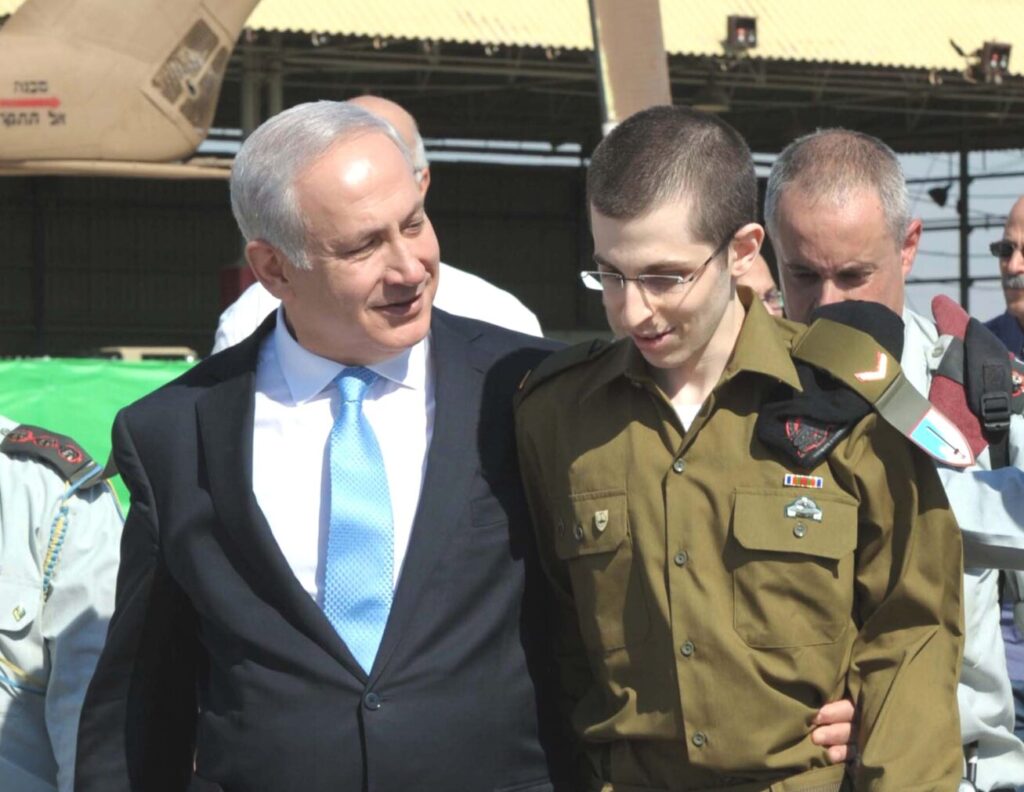
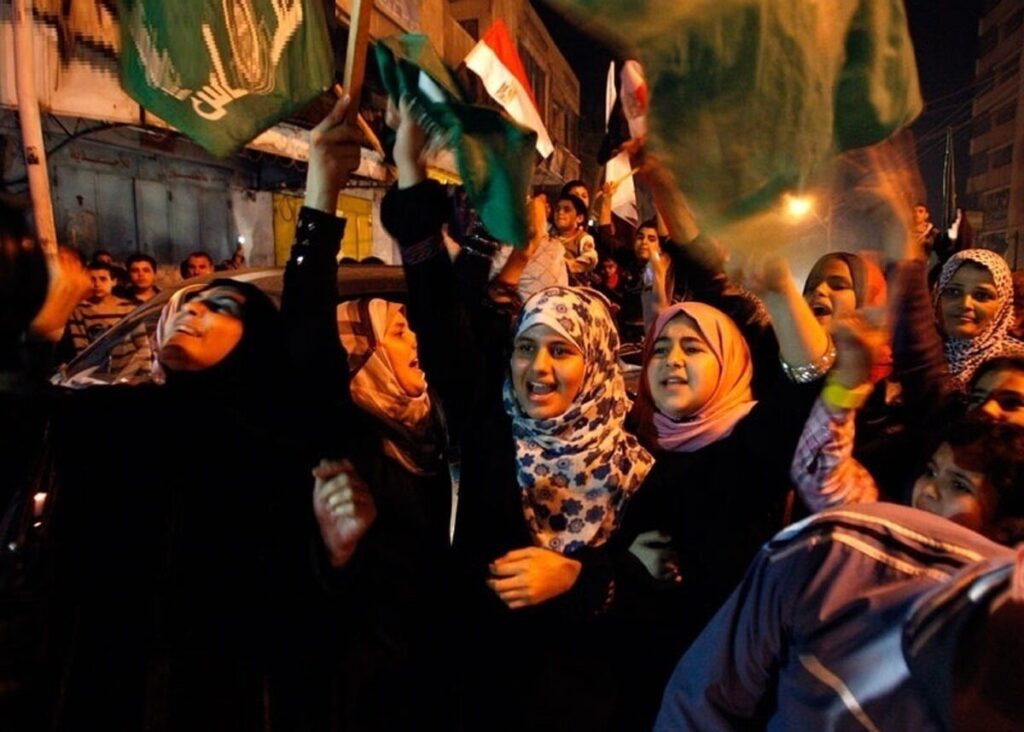
Many reactions in the Palestinian street and media to the release of prisoners in exchange for the release of abducted Israeli soldier Gilad Shalit reveal a worrying and disturbing narrative of glorification of the returning terrorists and support for their heinous crimes and violent ways. Calls for future abductions of Israeli soldiers as bargaining chips for future prisoner releases were also common.

AIJAC UPDATE - The political and moral costs of the failure to sanction Syria

AIJAC UPDATE - The political and moral costs of the failure to sanction Syria Author: Tzvi Fleischer Categories: Europe, Iran, Islamic Extremism, Israel, Lebanon, Middle East, Palestinians, Syria, Turkey, United Nations, Updates    

Today's Update looks at Syria, Iran and Turkey against the backdrop of the veto by China and Russia of sanctions by the UN Security Council against the Assad regime in Damascus for its ongoing violent crackdown against anti-government protesters. The resolution was supported by nine members but, significantly, Lebanon, which occupies a temporary seat on the Security Council, abstained from the vote, as did South Africa, India and Brazil. After the vote the EU indicated it intended passing its own sanctions against Syria. Meanwhile Turkey's PM Recep Erdogan continues to use the Syria issue and relentlessly attacks Israel for his own regional ambitions. We offer a number of articles that reveal the changing dynamics in the Middle East that are are not receiving sufficient attention in Australia and elsewhere.

Russia and China veto Syria sanctions

Russia and China veto Syria sanctions Author: Daniel Meyerowitz-Katz Categories: America, Asia, China, Russia, Syria, United Nations, Updates    

After weeks of controversy over a Palestinian statehood bid of little real consequence, some in the UN have been attempting to shift their focus onto one of the many situations in the world in which innocent people are being killed on a daily basis. To this end, the UN Security Council attempted to pass a motion to prevent Syria's ongoing crackdown on dissenting citizens. Initially, the European countries were attempting to sanction Syria through imposing an arms embargo. As Foreign Policy's UN correspondent Colum Lynch reports, even a watered-down version of this that merely condemned Syria and did not call for any tangible sanctions was vetoed by Russia and China...

[Post continues]

Flotilla Wanted

Flotilla Wanted Author: Tzvi Fleischer Categories: Syria, Updates    

The Syrian situation continues to simmer along, although it seems to be slipping out of the headlines.....

A story that got almost no coverage but should have was the theme of the protests for last Friday - to call "for foreign protection" of Syrian civilians...

This followed an appeal from the leading opposition groups for "the international community to send in human rights groups to monitor and help deter military attacks on civilians" in the increasingly bloody crackdown.

So my question is where are the human shields and flotillas?

Updates
Is Iran abandoning Assad?

Is Iran abandoning Assad? Author: Tzvi Fleischer Categories: Iran, Syria, Updates    

Is Iran starting to pull back from Syria's Assad regime, its closest ally, as the unrest and bloodshed in Syria continues?

Ostensibly, there are some signs that Teheran is, at least verbally, starting to create a bit of distance from Damascus.

Firstly, Iran's Foreign Minister publicly suggested Syria should meet the "legitimate demands" of the protestors. Then Iranian President Mahmoud Ahmadinejad said on television that "the [Syrian] people should have the right to elect and get their freedoms"...


Editorial: The Road to Damascus Author: Colin Rubenstein Categories: Iran, Libya, Syria    

The Libyan regime is imploding, as rebels opposed to Muammar Gaddafi have now taken control of most of the Libyan capital. It is immensely inspiring to witness this triumph of the Libyan majority over a particularly ruthless, totalitarian and bloody dictator, achieved against great odds and at a terrible cost. As US President Barack Obama said in welcoming the news, "the future of Libya is in the hands of its people."

However, that future remains unclear. It will be important over the next few months and years that the international community not view the departure of Gaddafi as the end game and do what it can to continue to support Libya in its transition to democracy, while preventing extremists from hijacking the people's revolution.


Five Things to Do to Topple Assad

Five Things to Do to Topple Assad Author: David Schenker Categories: America, Middle East, Syria    

On Aug. 18, US President Barack Obama issued a long overdue statement calling for regime change in Syria, declaring that the "time has come for President Bashar Assad to step aside." But will that call to action amount to anything in practice? The gestures that Obama has made, including ending the US import of Syrian petroleum products - totalling some 6,000 barrels per day - are little more than symbolic changes of policy. On the other hand, though the use of military force hasn't been explicitly removed from the table, it's clear that the American Government - not to mention the American public - has little appetite for another war in the Middle East.

 Fears for Libya and Syria’s WMDs

Fears for Libya and Syria’s WMDs Author: Sharyn Mittelman Categories: Libya, Syria, Updates    

Both Libya and Syria have large arsenals of weapons of mass destruction (WMD), and with the demise of Gaddaffi's regime and possibily the Assad regime, there are concerns that the WMDs could get into the wrong hands - with catastrophic results.

According to Ynet, most of Libya's chemical weapons are held at a facility located in Rabta, south of Tripoli. Western analysts believe that the country's WMD arsenal alone contains some 10 tons of various chemical agents which can inflict grave damage. It is also believed that Gaddafi was in possession of Scud-B missiles, over 1,000 tons of uranium powder and mass quantities of conventional weapons.

Western intelligence officials are trying to track Libya's chemical weapons arsenal. On CNN, US Envoy to the UN Susan Rice said that the US was taking steps to prevent the weapons from falling into the wrong hands.


Hamas versus Iran - Strange bedfellows falling out over Syria?

Hamas versus Iran - Strange bedfellows falling out over Syria? Author: Tzvi Fleischer Categories: Egypt, Iran, Palestinians, Syria, Updates    

According to a potentially very significant news story, Hamas and its long-time key patron, Iran, have had a falling out over the unrest in Syria...

While it is much too early to predict that the Hamas-Iran split will be permanent, if this did happen, it would be a major re-alignment of the Middle Eastern map, with important implications...

Is the violence in Syria finally ending?

Is the violence in Syria finally ending? Author: Daniel Meyerowitz-Katz Categories: Syria, Updates    

According to a breaking news report by Reuters, Syrian President Bashar al-Assad has informed the UN Secretary-General that police and military operations have stopped in Syria, implying that the violence that has been rocking the country may be over.

In a phone call with Assad on Wednesday, Ban "expressed alarm at the latest reports of continued widespread violations of human rights and excessive use of force by Syrian security forces against civilians across Syria, including in the Al Ramel district of Lattakia, home to several thousands of Palestinian refugees," the United Nations said in a statement...

[Post continues]

Palestinian refugees chased out of homes by shelling

Palestinian refugees chased out of homes by shelling Author: Daniel Meyerowitz-Katz Categories: Media/ Academia, Palestinians, Syria, Updates    

Israel has been accused of many deeds over the years. Removed from their context, the below paragraphs from a report in The Guardian could almost sound like an exaggerated report on an Israeli military operation in the 2008/09 Gaza conflict - the kind that would be released by Palestinian state-controlled media outlets.

UNRWA, the UN agency that aids Palestinian refugees, said the camp's residents fled after [the city] came under fire from gunboats and ground troops over the weekend. It was not immediately clear where the refugees were seeking shelter.

... The Local Coordination Committees, an activist group that helps organize protests... also confirmed troops fired at fleeing families. It said random gunfire erupted Monday in addition to a campaign of raids and house-to-house arrests...

[Post continues]

Syrian Dictator clutching at straws?

Syrian Dictator clutching at straws? Author: Daniel Meyerowitz-Katz Categories: Syria, Turkey, Updates    

As a post on the blog Harry's Place notes, with Syrian President Bashar al-Assad running out of things to blame his current predicament on, he appears to be ramping-up violence to compensate. This is characterised by yet another watershed moment in the ongoing turmoil - Assad shelled the city of Latakia from the sea over the weekend, reportedly killing 21 people..

This week has been marked by a turning point in the Syrian uprising.

After playing the terror card, the Palestine card, the resistance card and the sectarian card, and with no sign of the Syrian uprising slowing down, this week the Assad regime has gone for broke by using gun boats to shell the city of Latakia... What do you do after gunboats? Aerial bombing campaigns?

To illustrate the extent to which the Syrian authorities are clutching at straws...

[Post continues]

Assad’s survival plan explained Author: Tzvi Fleischer Categories: Syria, Updates    

Over the weekend in Syria, the regime was reportedly shooting people as they exited mosques after prayers near Damascus, and even used the navy to shell the port of Latakia, killing 21 people ...
Explaining why Assad is continuing to escalate the violence against his own people, noted American foreign policy pundit Walter Russell Mead has an excellent post describing Assad's strategy for survival. He says it relies on systematically attacking the centres of protest one by one with overwhelming force while assuming what the rest of the world does, or thinks, doesn't matter...

Arab States Increase Pressure on Syria, Syria Blames American Conspiracy

Arab States Increase Pressure on Syria, Syria Blames American Conspiracy Author: Daniel Meyerowitz-Katz Categories: Gulf states, Saudi Arabia, Syria, Updates    

As yesterday's post noted, condemnation of Syria seems to have reached a tipping point - with more and more world leaders finally criticising the Assad regime, well into the fifth month of violence. Even "hacktivist" collective Anonymous have jumped on the bandwagon, hacking into the Syrian Ministry of Defence website and leaving photographs of mutilated protestors as long as a message of support in both English and Arabic...

[Post continues]

AIR
Syria Under Fire as Assad Slowly Loses Supporters

Syria Under Fire as Assad Slowly Loses Supporters Author: Daniel Meyerowitz-Katz Categories: Iran, Syria, Turkey, United Nations, Updates    

Another stark reminder of the astounding brutality displayed by the Assad regime in Syria surfaced last week when the Guardian translated and published a harrowing account of Syrian woman Samar Yazbek's shocking torture at the hands of Syrian authorities.

Two huge men entered the room. They stood in readiness, in plainclothes. One of them stood to the right and the other to the left. With a signal from his eyes, each seized me by the shoulders, though not roughly. They seized me as if I were some object, easy for them to move. I did not resist when they started to lift me out of my chair. I even stood up, surprised at what was happening...

[Post Continues]

Iran's economic management is the regime's weak spot

Iran's economic management is the regime's weak spot Author: Allon Lee Categories: America, Iran, Syria, Updates    

Iran's economy appears so inherently fragile, that concerted external financial pressure on its energy sector could bring the regime to its knees and Washington Institute for Near East Policy analyst Patrick Clawson shows how it can be done:

If oil prices decline -- or, more important, if the United States and its allies can dissuade countries and companies from paying for Iranian oil (Washington has no objections if they receive said oil, only if they pay for it) -- then the Islamic Republic could face serious problems paying for the checks to which the Iranian people are rapidly becoming accustomed.


What of Turkey if the Palestinians and Kurds get their way?

What of Turkey if the Palestinians and Kurds get their way? Author: Allon Lee Categories: Iran, Iraq, Israel, Middle East, Syria, Turkey, Updates    

If two million Palestinians in the West Bank deserve a state, what of the 18 million Kurds in the region who have endured 100 years of persecution?

This is the tantalising question posed by Israeli analyst Dr. Guy Bechor who argues that Turkey should be careful what it advocates on behalf of Palestinians as it seeks regional popularity and leadership.


Iran arms Syria as UN shifts into low gear

Iran arms Syria as UN shifts into low gear Author: Daniel Meyerowitz-Katz Categories: Iran, Russia, Syria, United Nations, Updates    

The forces of Syrian President Bashar al-Assad stepped-up their assault on the opposition stronghold of Hama yesterday. As reported by Nada Bakri for The New York Times:

Ignoring mounting condemnations, the Syrian military sent tanks, armored vehicles and snipers on Wednesday into the symbolic center of Hama, a rebellious city that has emerged as a linchpin of the nearly five-month uprising, in what appeared a decisive step by President Bashar al-Assad to crush opposition to his rule.

The military's assault on Assi Square, the scene of some of the biggest demonstrations against Mr. Assad's leadership, was an event that many activists and residents had thought impossible, evidence of the government's determination to retake by force a city that suffered one of the most brutal crackdowns in Syrian history in 1982.

This blog has been closely following the situation in Syria...

Updates
UN 'Statement’ on Syria and Western Policy Options

UN 'Statement’ on Syria and Western Policy Options Author: Sharyn Mittelman Categories: Syria, United Nations, Updates    

Following on from Daniel's blog post regarding the UN Security Council 'statement' condemning the violation of human rights in Syria, this blog post considers the weaknesses of the UN statement in that it did not call for regime change, support the Syrian demonstrators or contain provisions for punitive measures or sanctions.  In light of the UN's inability act, this blog looks at Western policy options that could put pressure on Assad to go.


Do Syrians need our Assistance to Halt Ongoing Massacres?

Do Syrians need our Assistance to Halt Ongoing Massacres? Author: Daniel Meyerowitz-Katz Categories: Syria, United Nations, Updates    

The Assad regime in Syria has been continuing its vicious assault on the city of Hama, which began on the weekend. As The Jerusalem Post reports:

AMMAN - Syrian tanks pounded residential neighborhoods across the city of Hama on Monday in the heaviest barrage of a two-day assault to crush street demonstrations against President Bashar Assad, witnesses said.

Earlier on Monday, residents said at least four civilians were killed by tank fire on the second day of attacks on the city, where memories are still vivid of the brutal suppression of an uprising in 1982....

If Assad Falls...

If Assad Falls... Author: Reuel Marc Gerecht Categories: America, Middle East, Syria, Turkey    

The US administration's policy toward Syria is shaping up to be potentially the greatest missed opportunity of Barack Obama's presidency. If Syria were to break the right way and the regime in Damascus were to fall, the most tenacious state-sponsor of terrorism in the Arab world - Teheran's strongest ally and the lifeline to the terrorism-loving Lebanese Hezbollah - would be taken out. Alas, an administration that came into office only a little less eager to engage Damascus than Teheran seems stuck in its stillborn Israeli-Palestinian peace process and the turmoil of the Great Arab Revolt.

Arab Spring yields a Murky Summer

Arab Spring yields a Murky Summer Author: Yehonathan Tommer Categories: Egypt, Middle East, Syria, Turkey    

The acclaimed "Arab Spring" has given way to a murky summer, dominated by uncertainty, fog and danger as much as democratic hopes, according to academic experts. Some of the movements for reform which blossomed across the region earlier this year may take a long time to mature into democratic regimes resembling those in Eastern Europe which emerged after the fall of the Berlin Wall. Others may simply wilt and decay.

Weakened Hezbollah Shifts Blame Towards Israel

Weakened Hezbollah Shifts Blame Towards Israel Author: Daniel Meyerowitz-Katz Categories: International Security, Lebanon, NGOs, Syria, Updates    

Last week marked the fifth anniversary of the Second Lebanon war, fought between Israel and Lebanese terror group Hezbollah. Since the conflict concluded, Hezbollah has been systematically consolidating power in Lebanon and amassing arms for the next round of violence. However, there has not been a shot fired from Southern Lebanon into Israel for which Hezbollah has taken credit. This is in stark contrast to the situation before the incursion, when Hezbollah would periodically fire rockets and mortars into Israeli territory in order to raise tensions.

To mark the anniversary, Israeli academics Abraham Bell and Gerald Steinberg have written a piece in Ynet about a study that they are conducting on different NGO responses to the 2006 conflict, which has some rather disconcerting findings...

‘Multi-Party’ Reform: Too Little, Too Late for Assad?

‘Multi-Party’ Reform: Too Little, Too Late for Assad? Author: Geoffrey Levin Categories: Middle East, Syria, Updates    

In its biggest concession thus far to the protest movement that has swept the country, the Syrian cabinet on Sunday approved a bill permitting new political parties to exist alongside the Baath Party, which has ruled the country alone for over four decades. Yet the opposition understandably views the bill, which has yet to pass a vote before the parliament, with deep skepticism, as it comes after the government killed over 1,500 protestors. Al Jazeera reports:

Yasser Saadeldine, a Syrian opposition figure living in exile, said the new law "is designed to show on paper that the regime tolerates dissent while continuing killings and repression".

Reporting from Beirut, Al Jazeera's Rula Amin said that protesters are dismissing the draft law. The people are demanding "political freedoms, not just a law to organise how to form political parties".


Pressuring Syria/Syria and Iran

Pressuring Syria/Syria and Iran Categories: Iran, Syria, Updates    

This Update looks at policy options, as well as the potential benefits and costs, for Western governments seeking to pressure  Syria's Assad regime as the protests in Syria continue to spread and the death toll continues to mount.

The opening entry is an editorial from the New York Times, which urges that while a military invention is out of the question, Western nations "can bring a lot more pressure to bear" on the Assad regime. The paper notes that "awe" is the only possible response to the courage of Syrian protesters. It goes on to castigate US and European leaders for sending mixed message and various lifelines to the regime, urges the consumers of Syrian oil to stop buying it, and calls the Arab League's recent intervention on behalf of Assad a "disgrace".

Another anti-Israel rant by Randa Abdel-Fattah

Another anti-Israel rant by Randa Abdel-Fattah Author: Allon Lee Categories: Anti-Zionism, Australasia, Israel, Middle East, Palestinians, Syria, Terrorism, Updates    

On Wednesday, the Sydney Morning Herald featured a rant by Australian-born-Egyptian-Muslim-Palestinian pro-Palestinian activist Randa Abdel-Fattah arguing that the Israeli-Palestinian conflict and the latters' ongoing suffering stems from Israel supposedly seeking to safeguard the ''purity'' of a Jewish-only state.

The ostensible motivation for her article was a desire to share the numerous experiences of racism she claims to have witnessed when visiting Israel and the West Bank in May. Yet nowhere in the article is she able to recount a single example of the alleged racism because her real motive is to justify her support for a one-state solution.

Sectarian Explosion beginning in Syria?

Sectarian Explosion beginning in Syria? Author: Daniel Meyerowitz-Katz Categories: Lebanon, Palestinians, Syria, Turkey, Updates    

The situation in Syria took an even graver turn yesterday. As the ruling Assad regime continues to brutalise dissenting citizens, some Syrians appear to be lashing out at the regime's minority Alawite sect. In retaliation, several Allawites went on a rampage of their own. Nada Bakri reports in The New York Times:

On Sunday, residents of Homs, Syria's second-largest city, discovered the bodies of three Alawites mutilated and dumped in a deserted area, according to Omar Idlibi of the Local Coordination Committees, a group that helps organize and document protests. All three were armed government loyalists, he said...

"Flotilla to Syria" a reality, but not what you think

"Flotilla to Syria" a reality, but not what you think Author: Daniel Meyerowitz-Katz Categories: Anti-Zionism, Palestinians, Syria, Updates    

Sometimes, a news item comes along that seems far too convenient to actually be true. For a Middle East commentator, it's very rare to have clear-cut proof of something that you have been saying all-along. Today, however, is one of those occasions.

As noted in this post, the organisers of the (now mostly defunct) flotilla have worrying links to Hamas in Gaza. While there is undoubtedly suffering in Gaza, much of this can be attributed to its Hamas regime, which maintains control through torturing and murdering dissenters and censoring the press, while forcing Gazans to live in a perpetual state of war by refusing to negotiate with Israel or even recognise Israel's existence and renounce violence. It was, therefore, a no-brainer to point-out the hypocrisy of a group trying to make a political statement against Israel while cavorting with a far less savoury regime and ignoring much greater suffering elsewhere.

As a result many commentators - from Australian comedian Sandy Gutman to yours truly - have called for the flotilla activists to prove their self-proclaimed "humanitarian" intentions by going to Syria...

Syria’s Iraqi refugees flee Syria, highlighting regional changes

Syria’s Iraqi refugees flee Syria, highlighting regional changes Author: Geoffrey Levin Categories: Iraq, Islamic Extremism, Middle East, Syria, Terrorism, Updates    

While Turkey has attracted much media attention for its willingness to take in Syrian refugees in the camps it has set up near the border, many Syrians have fled to other neighbouring countries such as Iraq. Thousands of Iraqi refugees who fled Iraq for Syria due to the war are now fleeing Syria, heading back to their home country. Agence France-Presse reports:

Hayat Saad, legal officer at the Baghdad Refugee Centre, said "every day we deal with between 60 to 70 cases of families who have returned to the country...Daily, about 20 come from Syria -- the largest contingent -- followed by Egypt, Jordan, Yemen and Libya," she added.


AIR
AIJAC UPDATE - How the 2011 flotilla flopped/The controversial "anti-boycott" law

AIJAC UPDATE - How the 2011 flotilla flopped/The controversial "anti-boycott" law Categories: Anti-Semitism, Anti-Zionism, Islamic Extremism, Israel, Lebanon, Palestinians, Syria, Turkey, United Nations, Updates    

AIJAC's latest email Update looks at why and how the 2011 Gaza flotilla gambit fizzled out. In contrast to 2010's headline-grabbing political stunt that acted as a Trojan Horse for the Turkish Islamist IHH charity resulting in needless deaths and injuries, this was no replay.

US belatedly condemns Syria as Assad flaunts Western concerns

US belatedly condemns Syria as Assad flaunts Western concerns Author: Daniel Meyerowitz-Katz Categories: America, Europe, Syria, Turkey, Updates    

This blog has been following the baffling hesitation that the West has been showing towards making criticisms of the Assad regime in Syria, despite intense crackdowns on civilian protestors, noting how Syria is interpreting this hesitation as a free pass to continue brutalising its civilians.

After months of ongoing strife within the country, the US and French ambassadors both made the decision on Friday to visit the besieged city of Hama, a rebel stronghold on which Syrian troops have been mounting a vicious assault over the last few days. As The Sydney Morning Herald reported on Saturday...

Will the failed flotilla participants change course?

Will the failed flotilla participants change course? Author: Daniel Meyerowitz-Katz Categories: Anti-Zionism, Iran, Syria, Turkey    

As Stephen Pollard's column in the Guardian explained last night, Israeli diplomacy has all but prevented a repeat of last year's flotilla debacle.

So successful has Israel been in stymieing the flotilla that what is actually setting sail amounts to one small boat with nine activists on board, leaving two weeks late. It is barely worth noting, and poses no threat to the Israeli naval commando unit, Flotilla 13, which played out a range of scenarios in expectation of a more substantial group, from a peaceful takeover of the boats to dealing with activist violence...

Updates
Assad's carte blanche is hurting Syrians

Assad's carte blanche is hurting Syrians Author: Daniel Meyerowitz-Katz Categories: America, Iran, Libya, Syria, Updates    

While ruminating yesterday on the US's decision to intervene in Libya, Middle East scholar Barry Rubin gave several insights as to why the West would choose Libya to attack rather than Syria. The assessement, unfortunately, is not particularly flattering for our leaders:

I would suggest that the actual main reasons revolve around ideology. The administration is now obsessed with...

Turkish-Israeli Talks - Do they signal a shift?

Turkish-Israeli Talks - Do they signal a shift? Author: Geoffrey Levin Categories: Israel, Middle East, Syria, Turkey, Updates    

While AIJAC has covered news about this summer's attempted Gaza flotilla in several recent posts by Daniel Meyerowitz-Katz and Tzvi Fleischer, the story of last year's flotilla has still not come to an end. Haaretz reported that the release of the UN's report on last year's flotilla incident, due to be issued yesterday, has been postponed until July 27 pending current talks between the two governments.

While the delay itself does not come as a surprise, the fact that the talks are occurring may highlight a major shift in the priorities of the Turkish government and the future of Turkish-Israeli relations. Coming amidst the recent break in relations between Turkish Prime Minister Recep Tayyip Erdogan and Syrian President Bashar al-Assad due to the latter's violent crackdown on protesters, these talks may very well offer the possibility of a turning point that sees Turkish foreign policy somewhat realigning itself with Israel and America and moving further away from the rejectionist front led by Iran. 

Is Iran really not at war with the West?

Is Iran really not at war with the West? Author: Daniel Meyerowitz-Katz Categories: America, International Security, Iran, Iraq, Lebanon, Syria, Updates    

Since the bulk of US forces in Iraq have been withdrawn, the country has been seeing an increasingly worrying spike in violence. What is especially concerning is the alleged source of this renewed upsurge in the conflict. As reported in The Washington Post last week:

BAGHDAD - Three U.S. soldiers were killed this week in a rocket attack at a U.S. base near the Iranian border, the military said Thursday, bringing June's death toll to 15 and marking the bloodiest month for U.S. troops in Iraq in two years....

Déjà vu in Hama and Across Syria

Déjà vu in Hama and Across Syria Author: Geoffrey Levin Categories: Middle East, Syria, Updates    

In February 1982, over 29 years ago, Syria's President Hafez Assad sent his younger brother to ‘deal with' an uprising in a Sunni-majority city called Hama. Between 10,000 and 30,000 civilians died, killed for attempting to topple the Alawite dictator that reigned for over a decade.

Today history appears to be repeating itself, in the same city but with a different Assad. Reports today that 16 civilians in Hama were killed by President Bashar Assad's forces can be added to the already 1,300 dead since the current Syrian uprising began in March, 130 in Hama alone. These numbers are much smaller than the estimates from 1982, which numbered in the tens of thousands. Today, rather than President Hafez Assad, it is his son Bashar who presides over the current massacre in Hama, where his current victims are quite literally the children of those killed by Hafez.

The IAEA: countering proliferation at its convenience Author: Daniel Meyerowitz-Katz Categories: Syria, Updates    

An alleged Syrian nuclear reactor was bombed in 2007

Four long years after Syria's alleged nuclear program came to a sudden halt due to an [alleged] Israeli air strike, the international community is taking the Assad regime to task. As AP reports, the International Atomic Energy Agency has referred the program to the UN Security Council and it will be discussed next week. As for the delay, the report said that the IAEA had, in fact, been trying to gain access to the site since 2008...

Hezbollah and the Hariri Tribunal

Hezbollah and the Hariri Tribunal Categories: Lebanon, Syria, Updates    

This Update focuses on the impact of the unsealing of four indictments for Hezbollah members late last week by the UN's Special Tribunal for Lebanon (STL), investigating the 2005 murder for former Lebanese PM Rafiq Hariri.

We lead with an analysis and backgrounder by Prof. William Harris, a distinguished specialist on Syria and Lebanon based in New Zealand. Harris goes through the detailed history of the tribunal process and recent Lebanese politics up until the important turning point reached last week. Harris argues that the "STL is the only serious route to ridding Lebanon of a culture of impunity and paving the way for real pluralist politics free of terror and murder" but also elucidates some reasons for optimism that it can still be effective, despite Hezbollah's opposition and control over the Government.

UN-backed Tribunal indicts Hezbollah members for 2005 Hariri murder Author: Geoffrey Levin Categories: Lebanon, Middle East, Syria, Terrorism, Updates    

The Special Tribunal for Lebanon, a United Nations-backed court investigating the 2005 assassination of former Lebanese Prime Minister Rafiq Hariri, has issued indictments against four members of Hezbollah, the Lebanese Daily Star reports.

The indictments and arrest warrants have been delivered to the Lebanese cabinet - which has been Hezbollah-dominated since early this month. Some officials have tried to downplay the news. Interior Minister Marwan Charbel said that the announcement was not very important, as it is "just an indictment, and not a final verdict." Yet the results of this tribunal may have profound effects on Lebanon, as many have claimed the conviction of Hezbollah in the trial would be "explosive" for the small and politically unstable nation.


Scribblings: From Assad to Assad Author: Tzvi Fleischer Categories: Middle East, Palestinians, Syria    

British journalist and author Malise Ruthven has written an article for the New York Review of Books, later re-published in the Australian Financial Review (June 17), examining the history of Syria in the wake of the recent unrest, and especially the domination of the country by the minority Alawite sect since around 1963. In that article, he featured a very revealing and important quote from the 1930s.

It occurs in a 1936 letter sent by six Syrian Alawite leaders to Leon Blum, the Prime Minister of France. At the time, France was overseeing Syria under a League of Nations mandate. The Alawite leaders were concerned that France was encouraging negotiations leading to a unified independent Syria dominated by the Sunni majority, which would leave the Alawites a powerless and persecuted minority.

Syria's Business

Syria's Business Author: Jacques Neriah Categories: Syria    

The world has gotten accustomed since mid-March to reports of wide unrest sweeping Syria. Unlike Egypt and Tunisia but very much like in Libya, the Syrian regime has chosen to confront the "Arab Spring" with armed repression, including tanks, helicopter gunships and missile boats - thus provoking, like in the Tunisian case, a steady flow of refugees fleeing the battleground to a safe haven in Turkey, and who are revealing day after day the atrocities committed by the Alawite regime against its own people.

AIR
All in the Family

All in the Family Author: Douglas Davis Categories: Syria    

In the absence of free speech and a free press (among other political mod-cons) in Syria, Hafez al-Assad and then his son, Bashar, have cultivated the convenient habit of transacting business in the shadows, advancing and protecting - brutally, when necessary - the interests of the family and their fellow Alawites.

Inside Syria's popular rebellion/ Egypt's problematic drift

Inside Syria's popular rebellion/ Egypt's problematic drift Categories: Egypt, Syria, Updates    

Today's Update features two pieces looking inside the increasingly important Syrian popular rebellion, now almost three months old. It also contains an interesting new look at recent developments in Egyptian politics in the run-up to the September elections.

The lead item is a fascinating account from inside Syria from unidentified journalists affiliated with the top German magazine, Der Spiegel. They find a country which "has disintegrated into a surreal patchwork of places where it is tense but quiet, and combat zones in which the regime's most loyal units are killing people indiscriminately." They tell many terrible stories of murder by forces of a regime whose policy is simply to "kill and hope" they can hold on to power, and speak to many ordinary Syrians, who seem overwhelmingly determined that it will not.

Countering the Assad regime's use of rape as a weapon Author: Or Avi-Guy Categories: Syria, Updates    

As numbers of Syrian casualties and refugees increase, the heart breaking individual traumas are often obscured or forgotten - personal stories like those of women who have been raped by pro-regime forces, and therefore, face possible death due to the local tradition of honour killing. But in a hopeful story appearing in the press, it is being reported that after four sisters were allegedly raped by Assad supporters, local men have decided to marry them and offer them protection.

UN Tribunal Judge - Bashar Al-Assad ordered murder of Rafiq Hariri

UN Tribunal Judge - Bashar Al-Assad ordered murder of Rafiq Hariri Author: Tzvi Fleischer Categories: Lebanon, Syria, United Nations, Updates    

A new revelation has just added to the intense scrutiny already aimed at the repressive Assad regime in Syria in the wake of its bloody efforts to suppress a popular revolt over the past 3 months.

Detlev Mehlis, a German judge who previously headed a UN enquiry into the 2005 assassination of former Lebanese Prime Minister Rafik Hariri, has gone farther than even before in fingering the Syrian dictator Bashar al-Assad, as directly responsible for the murder.

Speaking on German radio:

Detlev Mehlis said Syrian President Bashar Assad "ordered Hariri killed" because he feared the premier was cooperating with France and the US in order to overturn the Syrian regime and disarm Hezbollah.

Updates

Iran involved in crushing demonstrations in Syria Author: Sharyn Mittelman Categories: Iran, Israel, Lebanon, Syria, Updates    

Haaretz is reporting that they have information from a senior Israeli source that Iran's Revolutionary Guard and Al-Quds force troops are operating throughout Syria to suppress anti-regime demonstrations and that Iran's Revolutionary Guard also helped organise the violent demonstrations attempting to breach the Israeli border on "Nakba" and "Naksa" Day, that is, May 15 and June 6.

Info Sources on the Syrian Revolution

Info Sources on the Syrian Revolution Author: Tzvi Fleischer Categories: Syria, Updates    

With the Syrian revolution still continuing, leading to much bloodshed, and potentially huge implications across the Middle East, it is very hard for outsiders to gauge what is actually happening on a day-to-day basis. The country is essentially closed to the media, so reporting is limited and the dramatic footage on the nightly news which featured in Tunisia and Egypt is simply not available, even though events are clearly much more bloody and horrifying. 

We therefore recommend the following two sources as daily clearing-houses for news about the Syrian revolution...

Palestinian Unity Agreement: Partisan Self-Interest? Author: Daniel Meyerowitz-Katz Categories: Middle East, Palestinians, Syria, Updates    

Rather than making a move in the interest of their people, Hamas and Fatah may be uniting in order to ward-off the possible consequences of the recent upheaval in the Middle East and maintain their grip on power.

Robert Danin writes in foreignaffairs.com that the recent Hamas-Fatah unity agreement may be a self-preservation initiative by both parties. Hamas, he argues, has suffered a massive blow as a result of the unrest in Syria and therefore is facing an uncertain future.

Misunderstanding Assad

Misunderstanding Assad Author: Tony Badran Categories: Syria    

These starry-eyed, bewildered justifications of the regime's current response are due to the fact that the majority of observers hold the belief that Assad is indeed a "reformer". Seen through this lens, Assad's actions would indeed appear baffling. Why wouldn't this "reformist" President simply reform? This question drove the analysts to speculate feverishly about hypothetical centres of power that may have prevented him from acting on his repressed reformist impulse. In its more laughable forms, this line of thinking led some analysts to "advise" Assad to "split" with his own regime.

Syria's unrest, Egypt's political transition

Syria's unrest, Egypt's political transition Categories: Egypt, Syria, Updates    

This Update concentrates on both the increasingly widespread protests in Syria, and the state of the political transition in Egypt, looking especially at the role of the Muslim Brotherhood there.

First up is a BICOM (British-Israel Communications and Research Centre) briefing on the state of the significant unrest in Syria. The paper reviews the conditions in Syria and predicts that a protracted period of strife looks likely. It goes on to examine the possible implications of the unrest, as well as any regime change, for both Israel and any peace prospects.

Assad under Fire Author: Roee Nahmias Categories: Syria    

Nonetheless, the question in Syria now is whether the genie of losing one's fear of the regime is indeed out of the bottle. For the time being, there is no unequivocal answer.

Unrest Spreads to Syria/ Escalation Around Gaza Categories: Israel, Palestinians, Syria, Updates    

This Update concentrates on the possibly highly significant outbreak of widespread unrest in Syria, and the growing Israeli-Palestinian violence, especially around Gaza.

We begin with a report on the unrest in Syria from Roee Nahmias, an Israeli journalist specialising in Lebanon and Syria. He points out the current unrest is the most significant in Syria since the Hama massacre of 1982, and the first time Bashar al-Assad has had to use significant force to put down opposition, and thus a test of his willingness to shed blood.

From Pyongyang with love

From Pyongyang with love Author: Allon Lee Categories: Asia, International Security, Iran, Middle East, Syria    

North Korean cooperation is a linchpin in Iran's development of ballistic missiles, without which progress would be retarded a very great deal. On Iran's nuclear push, the evidence is less conclusive, but North Korean assistance seems likely to be very significant to Iran’s nuclear progress to date.

Essay: The Turning of Turkey

Essay: The Turning of Turkey Author: Abigail Chernick Categories: Iran, Israel, Middle East, Syria, Turkey    

Since its decisive re-election in 2007, Turkish Prime Minister Recep Tayyip Erdogan's Justice and Development Party (AKP) has been re-aligning the country's foreign policy. Under Erdogan's governance, Turkey has been moving away from its 20th century Western orientation and towards an alliance with Iran, Syria and their proxies. But with the upcoming 2011 elections, hope remains for a retreat from these policies and re-alignment with the West, especially if the US and the EU move quickly to demonstrate to the Turkish people what the costs of such a permanent change of alignment would be.

AIR

IAEA: End of an era Author: Efraim Asculai Categories: International Security, Iran, Israel, Middle East, Syria    

On December 1 Dr. Mohamed ElBaradei, the three-term International Atomic Energy Agency (IAEA) director-general passed the keys to his office to his successor... He will probably be remembered as the director-general who politicised his position more than any of his predecessors.

Dealing with Syria Author: AIJAC staff Categories: Syria, Updates    

This Update contains three opinion pieces on Western, and especially US, policy toward Syria - commenting especially on the implications of a major blow-up between the Iraqis and Syrians last month, with the former withdrawing their Ambassador in protest over alleged Syrian involvement in terrorism in Iraq.

Updates

Essay: The Great Rift Author: Y. Carmon, Y. Yehoshua, A. Savyon and H. Migron Categories: Iran, Middle East, Palestinians, Saudi Arabia, Syria    

The Saudi-Iranian conflict, whose various aspects - geostrategic, religious, ethnic and economic - have been affecting the Middle East for the past 30 years, began with the Islamic Revolution in Iran, led by Ayatollah Ruhollah Khomeini.

A Year of Turmoil Author: Allon Lee Categories: Iran, Iraq, Israel, Lebanon, Middle East, Palestinians, Syria    

Israeli analyst and journalist Ehud Ya'ari is known not only for his encyclopaedic knowledge of everything going on across the whole Middle East, but for his extraordinary personal contacts throughout the region extending even into the ranks of many of Israel's most bitter enemies.

Scribblings: A Trip to Poll-land Author: Tzvi Fleischer Categories: Israel, Lebanon, Palestinians, Syria    

It is often asserted by pundits that both Israeli and Palestinian public opinion supports a two-state resolution. Therefore, it is claimed, it must be only the inability of the leaders of the two sides to overcome their own ambition, stubbornness and political limitations that is preventing Israeli-Palestinian peace.

Cast out terror TV Author: Colin Rubenstein Categories: Anti-Semitism, Australasia, Lebanon, Media/ Academia, Op-eds, Syria, Terrorism    

HEZBOLLAH'S terrorist television station is once again being beamed into Australia. Al-Manar, translated as "the beacon", has been called more accurately a beacon of hatred and violence. It is to be hoped that the Rudd Government and the Australian Communications and Media Authority are doing everything in their power to block the station.

Al-Qaeda Today/ Syria's Nuclear Secrets Author: AIJAC staff Categories: Afghanistan/ Pakistan, Iraq, Islamic Extremism, Lebanon, Middle East, Multimedia, Syria, Terrorism, Updates    

Today's Update features two new pieces detailing expert debates about the current status and capabilities of al-Qaeda. First up, Peter Bergen discusses the controversy between analysts who argue that the organisation has become largely localised and leaderless and those who argue that the central organisation in northern Pakistan is getting stronger.

Hezbollah and Lebanon Author: AIJAC staff Categories: Afghanistan/ Pakistan, Lebanon, Syria, Updates    

Today's Update focuses on Lebanon, and the progress of growing Syrian and Hezbollah dominance of that country, especially in the wake of a recent government decision which effectively makes Hezbollah and its "resistance" against Israel an official arm of the Lebanese government.

AIR

Lessons and Learning Author: Amotz Asa-El Categories: Iraq, Israel, Lebanon, Middle East, Syria    

As thousands followed the coffins of IDF soldiers Ehud Goldwasser and Eldad Regev, whose bodies arrived in Israel two years after the outbreak of the Second Lebanon War, a sense of sobriety, introspection and catharsis descended on the Jewish state.

Updates

Israel debates Hezbollah Prisoner Deal Author: AIJAC staff Categories: Afghanistan/ Pakistan, Israel, Lebanon, Syria, Terrorism, Updates    

Israelis are intensely debating at the moment the pros and cons of prisoner swap overnight with Hezbollah, which includes Israel trading five Lebanese prisoners, including the notorious child-killer Samir Kuntar, in exchange for the bodies of two Israeli soldiers, Ehud Goldwasser and Eldad Regev, abducted in the raid which sparked the 2006 war.

Future Tense in Beirut Author: Yehonathan Tommer Categories: Israel, Lebanon, Syria, Terrorism    

The Doha Agreement restored a tense quiet to Lebanon, pulling its rival ethnic communities back from the brink of an unwanted civil war. But, in the longer term, it represented a major step forward in Hezbollah's creeping efforts to assert hegemony over the country.

Israel and Syria / Arab World reacts to Olmert's legal problems Author: AIJAC staff Categories: Afghanistan/ Pakistan, Iraq, Israel, Middle East, Multimedia, Syria, Updates    

Today's Update contains some more differing analysis and opinion on the new indirect Israeli-Syrian talks. First up, top Israeli journalist and author Yossi Klein Halevi explains the sceptical view that appears to be predominant in Israel about the talks and the prospects of an Israeli-Syrian agreement.

Nuclear Revelations about Syria/ Israel-Syria negotiations? Author: AIJAC staff Categories: Afghanistan/ Pakistan, International Security, Israel, Multimedia, Syria, Updates    

This Update focuses on two recent developments vis a vis Syria. Firstly, according to the US CIA Director, what Israel destroyed in a mysterious airstrike in Syria last September was a plutonium producing nuclear reactor, capable of producing enough plutonium for one to two nuclear bombs per year, built with North Korean assistance.

Live by the sword... Author: Eyal Zisser Categories: Lebanon, Syria, Terrorism    

On late Tuesday evening, February 12, 2008, Imad Mugniyah, the head of the military wing of the Lebanese Hezbollah organisation, was killed in a car-bomb attack in Damascus. Mugniyah's body was taken to Beirut, where he was buried two days later in an impressive ceremony organised by Hezbollah.

AIR

Political Crisis in Lebanon/ The case for "Jihadism" Author: AIJAC staff Categories: Afghanistan/ Pakistan, Islamic Extremism, Lebanon, Multimedia, Syria, Terrorism, Updates    

As readers may be aware, Lebanon has had no president since last week. The term of the last president, pro-Syrian Emile Lahoud, ended on Nov. 23. However, no successor has been elected because of a stand-off between the pro-Syrian opposition, led by Hezbollah, and the anti-Syrian government, led by PM Fouad Sinora and Saad Hariri, son of assassinated former Prime Minister Rafiq Hariri.

Lebanon's Government by Murder Author: David Schenker Categories: Lebanon, Multimedia, Syria    

Forty Lebanese members of parliament belonging to the pro-Western, anti-Syrian March 14 majority bloc currently reside in Tower 3 at Beiruts Phoenicia Intercontinental Hotel... But the lawmakers are not guests; they are prisoners.

Updates

Hezbollah and Lebanon Updates Author: AIJAC staff Categories: Lebanon, Syria, Terrorism    

This Update features three pieces on the state of Hezbollah efforts within Lebanon to prepare militarily for another round of conflict with Israel, and politically, to gain control of the Lebanese government.

Editorial: Lessons Learned Author: Colin Rubenstein Categories: Israel, Lebanon, Palestinians, Syria, Terrorism    

The Winograd Committee's Interim Report, assessing Israel's performance in the first days of last year's Hezbollah-Israel conflict, has strongly criticised Israel's prime minister, defence minister and former military chief of staff for setting impossible-to-achieve objectives and for moving without adequate planning.

AIR Updates

The barriers to peace in Middle East Author: Colin Rubenstein Categories: Iran, Iraq, Islamic Extremism, Israel, Lebanon, Middle East, Op-eds, Palestinians, Syria    

The resurgence of internal Palestinian conflict in recent days sheds some light on the assertion advanced again by the report of the Iraq Study Group in Washington. This claim is that the Israeli/Palestinian question is the "core" of the problems radiating out of the Middle East. Everyone of goodwill wants Israeli-Palestinian peace as quickly as possible. However, the belief that it is the key to the region's problems is not only incorrect, it is counter productive.

Too high a price for peace Author: Colin Rubenstein Categories: America, Iran, Iraq, Middle East, Op-eds, Syria    

The bipartisan Iraq Survey Group report to US President George Bush makes some reasonable if unsurprising recommendations about military strategy in Iraq, but also two recommendations about wider Middle Eastern policy that are fundamentally flawed.

AIR

Editorial: A State of Flux Author: Colin Rubenstein Categories: Israel, Lebanon, Palestinians, Syria    

The always volatile politics of Israel have, in that curiously Israeli way, returned to their normal state - that is, a state of flux. The conduct and consequences of the war against Hezbollah have seen accusations hurled back and forth between the various political parties, pundits, and serving and retired military officers.

Hezbollah's new battle at home Author: Ted Lapkin Categories: Israel, Lebanon, Op-eds, Syria    

IF LOVE means never having to say you're sorry, that principle should apply with redoubled force when the emotion in question is hate. So when Hezbollah leader Sheikh Hassan Nasrallah publicly apologised for igniting the recent Lebanese conflict, his boasts of victory over Israel began to ring a tad hollow.

Updates

Yes, the Problem is "Islamic Fascism" Author: External author Categories: Iran, Islamic Extremism, Lebanon, Syria, Terrorism    

It took US President George W. Bush to tell the truth to Britain about the massive plot to blow US-bound airliners out of the sky. In his first comment on the apparently foiled attempt to explode airliners flying from Britain to the US, Bush put it simply: "This was a stark reminder that this nation is at war with Islamic fascists."

How to stop another war Author: Tzvi Fleischer Categories: Israel, Lebanon, Middle East, Op-eds, Syria    

WITH the smoke still clearing from Lebanon and northern Israel, the crucial question is whether the post-war resolution will remove the sources of the violence. Otherwise, the world will witness a similar round of conflict in another few months or years, with all the suffering that will entail.

Editorial: The Axis of Terror Acts Author: Colin Rubenstein Categories: Israel, Lebanon, Syria, Terrorism    

Israel has once again been dragged into a war it did not want and did not start. Just as was predicted in May's Australia/Israel Review editorial, Iran's rulers have apparently used their control over Hezbollah and influence over Hamas to create a crisis...

A good resolution, but can it be put into lasting effect? Author: Colin Rubenstein Categories: International Security, Iran, Israel, Lebanon, Op-eds, Syria    

THE principles enunciated in UN Security Council Resolution 1701 on Lebanon, passed on Friday, are a positive step towards a sustainable end to the bloody conflict between Israel and Hezbollah. The overarching problem, unfortunately, is that this resolution appears to lack adequate mechanisms to implement those principles.

Hezbollah stands in way of peace Author: Colin Rubenstein Categories: Iran, Iraq, Islamic Extremism, Israel, Lebanon, Middle East, Op-eds, Syria    

When the Hezbollah-Israel war began in mid-July, many in the Arab world made some startling comments. "The operations of Israel in Gaza and Lebanon are in the interest of people of Arab countries and the international community," wrote the editor of the Kuwaiti Arab Times. Milder statements in the same vein - blaming Hezbollah for the violence - came from across the Arab world, including the governments of Saudi Arabia, Egypt and Jordan.

UN Security Council Resolution 1701 - 2006 Categories: Documents, Israel, Lebanon, Syria    

In the midst of a military confrontation between Israel and Hezbollah militia forces in Lebanon in July-August 2006 which brought about hundreds of deaths and injuries on both sides, the extensive damage to civilian infrastructure and massive internal displacement triggered by the 12 July abduction of two Israeli soldiers in a cross-border raid, the requirements for a ceasefire agreement were discussed by the UN General Assembly, which referred the issue to the Security Council. After lengthy discussion, a final draft for a Security Council resolution was adopted on August 11, 2006.

War as an extension of politics Author: Ted Lapkin Categories: Iraq, Israel, Lebanon, Middle East, Op-eds, Syria    

General Patton once observed that you don't win wars by dying for your country; you win them by making the other poor bastard die for his. But Hezbollah has turned that pearl of military wisdom on its head. These jihadists are trying to defeat Israel, not by killing Jews, but by engineering a slaughter of the Lebanese populace.

Want Mideast Peace? Get the right ceasefire in Lebanon Author: Colin Rubenstein Categories: Iraq, Israel, Lebanon, Middle East, Op-eds, Syria    

On Wednesday, Israeli Prime Minister Ehud Olmert said, "I genuinely believe the outcome of the present [conflict] and the emergence of a new order that will provide more stability, will help create the necessary environment that will allow me ... to create a new momentum between us and the Palestinians." He added, "We want to separate from the Palestinians. I'm ready to do it." The connection between the conflict in Lebanon and Israeli-Palestinian peace negotiations may not seem obvious, but Olmert is right. So it is absolutely crucial that any ceasefire in Lebanon does more than simply halt the immediate bloodshed.

AIR

On the Border Author: Amotz Asa-El Categories: Israel, Lebanon, Syria    

As the IDF's counter-attacks against Hezbollah's outposts, personnel and materiel entered their third week, it was still difficult to predict how long the skirmishing would last and what its outcome would be.

Force-ful Action Author: External author Categories: International Security, Lebanon, Syria    

As diplomacy to halt the violence in Lebanon slowly gathers momentum, US Secretary of State Condoleezza Rice has endorsed the idea of an international "stabilisation force" to keep the peace, seconding proposals previously put forward by UN Secretary-General Kofi Annan and British Prime Minister Tony Blair.

Bloodbath blurs war truths Author: Bren Carlill Categories: Iran, Israel, Lebanon, Multimedia, Op-eds, Palestinians, Syria    

Amidst the front-page photos of bleeding children, it?s difficult to find clarity regarding the conflict raging in Israel and Lebanon. We all know the spark that set the region alight ? an unprovoked Hizbollah kidnapping of Israeli soldiers under the cover of missiles fired at Israeli cities. This was preceded by a Hamas-led attack from Gaza, which also involved kidnapping and rockets fired. The depressing sight of dead and injured civilians has since helped blur the reasons behind the violence.

Updates

Autonomy key to peace in Lebanon Author: Colin Rubenstein Categories: Iran, Israel, Lebanon, Middle East, Op-eds, Syria, Terrorism    

IN AN extraordinary statement, the editor of a Kuwaiti newspaper, the Arab Times, argued last week that ``the operations of Israel in Gaza and Lebanon are in the interest of people of Arab countries and the international community''. Milder statements in the same vein, blaming Hezbollah for the violence, have come from across the Arab world, including the governments of Saudi Arabia, Egypt and Jordan.

Party Games Author: External author Categories: Iran, Islamic Extremism, Lebanon, Multimedia, Syria, Terrorism    

Since the Lebanese branch of Hezbollah was created by Iran in 1982, it has metamorphosed from its early beginnings as a localised terrorist organisation into a significant armed presence in Lebanon that has demonstrated its ability to carry out terror attacks far beyond the borders of the Middle East. Today Hezbollah is the only armed force that controls a political party in Lebanon. For its supporters in Lebanon, Hezbollah is the sponsor of social welfare agencies that provide education, health care, employment, and other services. Hezbollah uses these institutions as a mechanism for indoctrination and a pool for recruiting new members.