Australia/Israel & Jewish Affairs Council

America

YOU ARE IN: Home Page > Topics > America

US clamping-down on terror supporters and war criminals

US clamping-down on terror supporters and war criminals Author: Daniel Meyerowitz-Katz Categories: America, Holocaust/ War Crimes, Iran, Sudan, Syria, Terrorism, Updates    

After frequent calls on this blog for some action against Sudanese President Omar Bashir, it is welcome news that the US Congress is committing to halt aid to any country that hosts the indicted war criminal.

A US House of Representatives press release reports that the House Appropriations Committee has adopted an amendment to the State and Foreign Operations Appropriations bill for 2013 to this effect, proposed by Representative Frank Wolf...

US Sanctions Telecommunications Companies in Syria and Iran

US Sanctions Telecommunications Companies in Syria and Iran Author: Sharyn Mittelman Categories: America, Iran, Syria, Updates    

US President Barack Obama has announced that the US will apply new sanctions to prevent companies from using technology that help repressive regimes in Syria and Iran target dissidents.

The new US sanctions will target Syrian and Iranian government agencies and officials who directed the surveillance operations, as well private companies.

AIR
The crisis of bad journalism: why Lateline guest is being ridiculed everywhere

The crisis of bad journalism: why Lateline guest is being ridiculed everywhere Author: Daniel Meyerowitz-Katz Categories: America, International Jewry, Israel, Media/ Academia, Updates    

Last night, ABC Lateline featured an interview by Emma Alberici of former New Republic editor Peter Beinart. Beinart has been a figure of much controversy lately due to his new book The Crisis of Zionism -- an extension of his 2009 essay 'The Failure of the American Jewish Establishment' in the New York Review of Books -- in which he makes the case that the Jewish community in America is taking an incorrect line on Israel and provides his own perspective on how the Israeli/Palestinian conflict ought to be addressed.

The book provoked a litany of responses from across the political spectrum, with almost every senior figure in the American foreign policy world deriding or distancing themselves from his contribution. As a result, there is a very substantial body of work from which to draw in order to evaluate every point that he makes. In general, most experts agree that Beinart is largely well-intentioned and does genuinely want the best for Israel, however he is at the same time hopelessly naive and heavily encumbered by a lack of serious research on the topic. His views are those of...

Israel and US debate Red Lines on Iran

Israel and US debate Red Lines on Iran Author: Michael Herzog Categories: America, Iran, Israel    

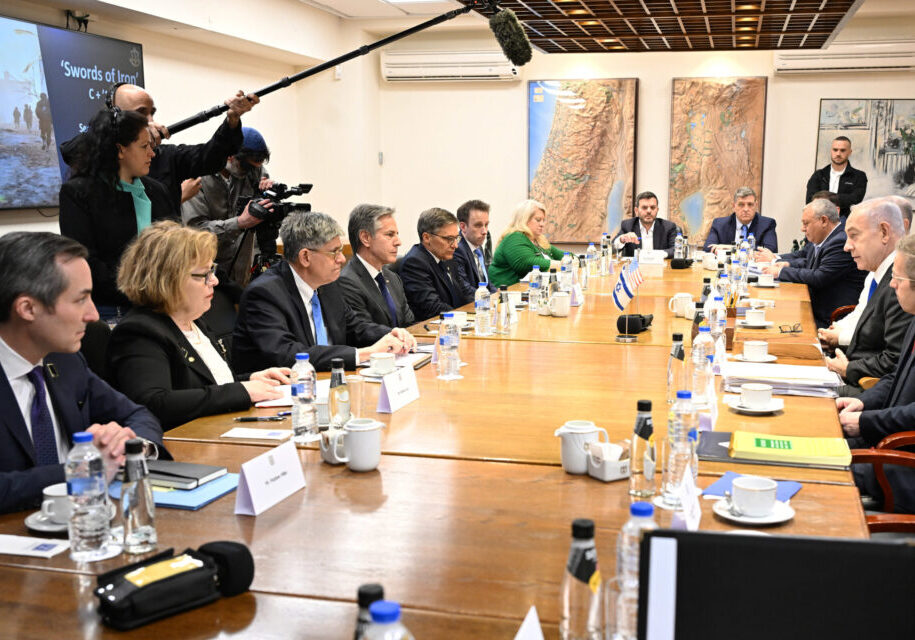
The March 5 summit between US President Obama and Israeli Prime Minister Binyamin Netanyahu marked an important milestone in the US-Israeli decision-making process on Iran's nuclear program. The meeting helped clarify positions and narrow gaps, yet significant differences remain to be addressed in the coming months.

British Prime Minister confirms Iranian nuclear threat as Obama warns Romney that it is no game

British Prime Minister confirms Iranian nuclear threat as Obama warns Romney that it is no game Author: Daniel Meyerowitz-Katz Categories: America, India, Iran, Updates    

The Guardian's Patrick Wintour and Julian Borger have reported that British Prime Minister David Cameron has explicitly stated that Iran is intending to develop nuclear weapons. This comes just months after the same newspaper revealed that the British military has begun putting in place preparations for a possible war with Iran. That said, Cameron still backs sanctions and is particularly concerned with China and India.

David Cameron has warned that Iran is seeking to build an "inter-continental nuclear weapon" that threatens the west, as he urged Israel to allow time for sanctions to force the Iranians to change their strategic stance...

Obama and Bibi and Iran

Obama and Bibi and Iran Categories: America, Iran, Israel, Updates    

The past few days saw an intense period of discussion about the Iranian nuclear crisis in Washington involving both US President Obama, and visiting Israeli PM Binyamin Netanyahu. The three focal points of analysis were Obama's Speech to the America-Israel Public Affairs Committee (AIPAC) on Sunday (video here), the subsequent meeting between the two leaders on Monday and their public statement following the meeting, and Netanyahu's Speech to AIPAC on Monday evening (video here). We recommend reading all three original texts, and provide analysis of the context of all three below.

Updates
Reactions to Obama's AIPAC Speech

Reactions to Obama's AIPAC Speech Author: Sharyn Mittelman Categories: America, Iran, Israel, Updates    

On March 4, US President Barack Obama delivered a speech to the American Israel Public Affairs Committee's (AIPAC) annual policy conference. In his speech Obama emphasised his strong support for the State of Israel, and policy on Iran.

This blog post looks at a variety of resposes to the speech.

Fisking Four Corners: getting the facts straight on Syria, Israel and Iran

Fisking Four Corners: getting the facts straight on Syria, Israel and Iran Author: Daniel Meyerowitz-Katz Categories: America, Iran, Israel, Media/ Academia, Syria, Updates    

Last night, ABC's Four Corners program focussed on the uprising in Syria. The program mostly featured a British Channel Four documentary on the Assad regime's systematic torture of Syrian opposition-members, including children, which gave a shocking insight into the events besetting Syrians opposed to their government's policies. The program ended, however, with host Kerry O'Brien interviewing notorious Middle-East correspondent Robert Fisk for 15 minutes in which Fisk was essentially given a pedestal to promulgate his views unchallenged...

The plight of Venezuela’s Jewish community

The plight of Venezuela’s Jewish community Author: Allon Lee Categories: America, Anti-Semitism, International Jewry, Israel, Updates    

Venezuelan Supremo Hugo Chavez often accuses Israel of committing genocide against the Palestinians.

And so voluminous is the Chavez definition of the term that it is a surprise he has failed to notice that half of his own country's 200-year-old Jewish community has disappeared since he assumed power in 1998. But then the evaporation of this patriotic, productive, and loyal group is largely a consequence of Chavez's hostile policies and rhetoric...

Iran "not developing a bomb" clarification

Iran "not developing a bomb" clarification Author: Daniel Meyerowitz-Katz Categories: America, Iran, Israel, Updates    

Earlier in the week, Overland editor Jeff Sparrow interpreted remarks from US Defense Secretary Leon Panetta that Iran is not trying to develop a "nuclear weapon", but a "nuclear capability" to mean that Iran's nuclear program is entirely legal. While Sparrow was using this quote to help support a perverse conspiracy theory involving Israel, for reasons unknown, trying to dupe the rest of the world into punishing Iran, Panetta is not the only official to have stated that Iran is not developing a nuclear weapon. In fact, Panetta himself has made it clear that Iran could have a nuclear weapon within a year, were it to make the decision to build one. Furthermore, Reuters reported yesterday that Israeli Defence Minister Ehud Barak said something similar, albeit in more detail...

 Australia and US Senate seek tougher sanctions on Iran

Australia and US Senate seek tougher sanctions on Iran Author: Sharyn Mittelman Categories: America, Australasia, Iran, Updates    

As we noted in a post last week, the EU lat weeked imposed new tougher sanctions on Iran, and today Australia followed suit.

Foreign Minister Kevin Rudd announced from Lithuania that Australian intends to impose additional sanctions in response to Iran's continuing non-compliance with United Nations Security Council (UNSC) resolutions on its nuclear program.

Meanwhile, the US Senate has voted unanimously to pass the most stringent economic sanctions against Iran to date. However, the move was opposed to by the Obama administration.

US and EU place tougher sanctions on Iran

US and EU place tougher sanctions on Iran Author: Sharyn Mittelman Categories: America, Europe, Iran, Updates    

Following the Iranian ‘mob' attack on the British embassy, France, Germany, Italy and the Netherlands have recalled their ambassadors temporarily from Iran. The UK immediately closed its embassy in Iran and ordered Iran's dipxlomatic staff to leave London.

A meeting of EU foreign ministers in Brussels condemned the attack on the British embassy, and announced new economic and travel sanctions on Iran to deter its nuclear program.  The sanctions will freeze the assets of 143 companies and ban 37 Iranian nationals described as "directly involved in Iran's nuclear activities" from entering the EU.  However, the EU did not follow Britain, Canada and the US which severed all dealings with Iran's Central Bank.  France has also been urging collective EU action to follow the British example and also to stop oil imports from Iran.

The US Congress also seems poised to push stronger action on Iran. On December 1, the US Senate unanimously approved tougher sanctions against Iran, voting to penalise foreign financial institutions that do business with Iran's Central Bank - the main conduit for its oil revenues...

Iran responds to IAEA by threatening to destroy Israel... again + Australia feels the fallout

Iran responds to IAEA by threatening to destroy Israel... again + Australia feels the fallout Author: Daniel Meyerowitz-Katz Categories: America, International Security, Iran, Israel, United Nations, Updates    

As outlined in yesterday's update, the UN's atomic energy watchdog has just released a report that just falls short of definitively stating that Iran has a nuclear weapons program - seemingly the closest that the UN ever comes to an unequivocal condemnation of a country that is not Israel. The report has emerged amid rumours that Israel is gearing-up for an attack on Iran and is busy soliciting support from allies in the UK and the US.

Predictably, Iran did not respond with steps to assure the international community that its nuclear program is peaceful, but instead blamed an American conspiracy and then threatened to destroy Israel.

Iran denies the allegations and says the evidence used by the U.N. nuclear watchdog was fabricated by the United States and its allies. It has insisted that its nuclear program is aimed only at generating electricity and ensuring an independent fuel supply for its nuclear power plants.

... "If smoke columns rise from our nuclear facilities, then this scenario could happen in other areas," said Brig. Gen. Massoud Jazayeri, deputy chief of staff of the Iranian armed forces. "The Dimona station in Israel is the easiest...

Palestinians admit that they do not have statehood support

Palestinians admit that they do not have statehood support Author: Daniel Meyerowitz-Katz Categories: America, Palestinians, United Nations, Updates    

A breaking report from the AP reveals that the Palestinian Authority (PA)'s Foreign Minister, Riyad al-Malki, has admitted that they have failed to muster the nine votes needed in the UN Security Council in order to approve their statehood bid.

Palestinian Foreign Minister Riad Malki told The Associated Press Tuesday, "It is clear now, with the U.S. counter effort and intervention, that we are not going to have these nine votes." They can still apply to the General Assembly.

That the US has been campaigning strongly against the bid is unsurprising given the difficult situation that the PA has been placing the Obama administration in through its recent UN antics...

Has Iran run down the nuclear clock?

Has Iran run down the nuclear clock? Author: Allon Lee Categories: America, International Security, Iran, Israel, Middle East, Updates    

A new International Atomic Energy Agency (IAEA) report due to be released tomorrow is believed to contain compelling evidence that Iran is now at the end stage of its nuclear research program and is actively working on weaponisation technologies.

Ahead of the report's scheduled release we present a range of reading that predicts what the report will likely detail, where the effort to contain Iran's nuclear weapons program is at and whether the time has come to move from economic sanctions to military options.

AIR
Sudden jump in odds on Iran attack

Sudden jump in odds on Iran attack Author: Daniel Meyerowitz-Katz Categories: America, Iran, Israel, Palestinians, Terrorism, United Kingdom, Updates    

A whole series of events last night made an attack on Iran's nuclear facilities suddenly seem far closer than had previously been the case. After a week of speculation in the Israeli press, Haaretz reported yesterday that the Prime Minister and Defence Minister are trying to gain cabinet support for a strike.

Prime Minister Benjamin Netanyahu and Defense Minister Ehud Barak are trying to muster a majority in the cabinet in favor of military action against Iran, a senior Israeli official has said. According to the official, there is a "small advantage" in the cabinet for the opponents of such an attack.

Netanyahu and Barak recently persuaded Foreign Minister Avigdor Lieberman, who previously objected to attacking Iran, to support such a move.

This report coincided with the test-firing of a new long-range Israeli missile, which could be capable of reaching targets in Iran...

 Israel – a strategic asset for the US... and Australia

Israel – a strategic asset for the US... and Australia Author: Sharyn Mittelman Categories: America, Israel, Updates    

The US-Israel alliance has come under increasing strain in recent time with both academics and US policy makers suggesting that the alliance has become more of a liability than an asset for US national interests. For instance, the infamous Stephen Walt and John Mearsheimer based their whole "Israel Lobby" slander on the assumption that being associated with Israel was obviously and unequivocally bad for the US, and only some undemocratic and vaguely nefarious lobby could possible explain the continuing US alliance with Israel, as noted Middle East scholar Martin Kramer analysed and debunked brilliantly a few years ago.

However, a new report released by the Washington Institute for Near East Policy "Israel: A Strategic Asset for the United States" (‘the report'), does even more to refute this trend in analysis and instead argues that US policy makers should acknowledge that the US-Israel alliance strongly serves US national interests in several important ways.

Two victims from Palestinian UNESCO ploy: UNESCO and the US

Two victims from Palestinian UNESCO ploy: UNESCO and the US Author: Daniel Meyerowitz-Katz Categories: America, Palestinians, United Nations, Updates    

The admission of Palestine into the United Nations Educational, Scientific and Cultural Organisation, little more than a symbolic victory for the Palestinian Authority (PA), has severe repercussions on the largest funder of both the PA and UNESCO: The United States. As AFP has reported, US legislation prevents US funding of any UN body that admits the Palestinians as a member.

"We were to have made a $US60 million ($A57.11 million) payment to UNESCO in November and we will not be making that payment," State Department spokeswoman Victoria Nuland told reporters on Monday.

Nuland said the Palestinian admission "triggers longstanding (US) legislative restrictions which will compel the United States to refrain from making contributions to UNESCO."...

Considering the last resort option on Iran

Considering the last resort option on Iran Author: Daniel Meyerowitz-Katz Categories: America, Iran, Updates    

International legal scholar Louis René Beres, US Admiral (ret.) Leon Edney and US Lt Gen (ret.) Thomas G. McInerney have written an insightful article in Haaretz, looking at the current Iranian nuclear predicament and the various possible responses, focusing on the legality of a pre-emptive strike. They argue that the risk presented by a nuclear Iran is so great that a US strike is at least likely to be justifiable.

The Caroline Doctrine notes an implicit distinction between preventive war (which is never legal ), and preemptive war. Even the latter is not permitted merely to protect oneself against an emerging threat, but only when the danger posed is "instant" and "overwhelming."...

[Post continues]

Updates
Breakdown of Iranian attempted assassination of Saudi official on US soil

Breakdown of Iranian attempted assassination of Saudi official on US soil Author: Daniel Meyerowitz-Katz Categories: America, Iran, Saudi Arabia, Terrorism, Updates    

This morning (Australian time), US Attorney-General Eric Holder announced that two men had been charged with attempting to assassinate the Saudi ambassador to the US and, more significantly, doing so on behalf of the Iranian government. The two men were Manssor Arbabsiar, a naturalised US citizen of Iranian origin, and Gholam Shakuri, who is believed to be in Iran. Incredibly, Arbabsiar cooperated with the US authorities once arrested and so much of the information on the assassination plot was collected from his testimony.

Naturally, the Iranian government has denied the allegations and blamed a Zionist conspiracy.

Foreign Ministry spokesman Ramin Mehmanparast called the claims a "prefabricated scenario" and a "ridiculous show...

[Post continues]

Russia and China veto Syria sanctions

Russia and China veto Syria sanctions Author: Daniel Meyerowitz-Katz Categories: America, Asia, China, Russia, Syria, United Nations, Updates    

After weeks of controversy over a Palestinian statehood bid of little real consequence, some in the UN have been attempting to shift their focus onto one of the many situations in the world in which innocent people are being killed on a daily basis. To this end, the UN Security Council attempted to pass a motion to prevent Syria's ongoing crackdown on dissenting citizens. Initially, the European countries were attempting to sanction Syria through imposing an arms embargo. As Foreign Policy's UN correspondent Colum Lynch reports, even a watered-down version of this that merely condemned Syria and did not call for any tangible sanctions was vetoed by Russia and China...

[Post continues]

US President Obama's speech to the UN General Assembly

US President Obama's speech to the UN General Assembly Categories: America, International Security, Middle East, Speeches, United Nations    

Mr. President, Mr. Secretary-General, fellow delegates, ladies and gentlemen: I would like to talk to you about a subject that is at the heart of the United Nations - the pursuit of peace in an imperfect world.

War and conflict have been with us since the beginning of civilization. But in the first part of the 20th century, the advance of modern weaponry led to death on a staggering scale. It was this killing that compelled the founders of this body to build an institution that was focused not just on ending one war, but on averting others; a union of sovereign states that would seek to prevent conflict, while also addressing its causes.


Origins of the Palestinian UDI bid

Origins of the Palestinian UDI bid Author: Jonathan Schanzer Categories: America, Palestinians, United Nations    

The Unilateral Declaration of Independence, or UDI, initiative was reportedly born in May 2005, when Abbas attended the summit of South American and Arab states in Brazil, where he met with President Luiz Inácio "Lula" da Silva. Lula is said to have promised Abbas that, toward the completion of his second term ending January 1, 2011, he would rally support among Latin American states for the Palestinians to declare independence at the United Nations.

In Palestinian statehood bid endgame, the real loser will be peace

In Palestinian statehood bid endgame, the real loser will be peace Author: Daniel Meyerowitz-Katz Categories: America, Israel, Media/ Academia, Palestinians, Quartet, United Nations, Updates    

As the day of reckoning for the Palestinian statehood bid at the UN, now reportedly slated for Friday, draws ever closer, there is a frantic last-minute effort to avert the potentially disastrous showdown in favour of peace talks. Such talks are widely recognised as the only possible way to reach a genuine and lasting solution to the decades-old conflict. For example, Quartet Middle East envoy Tony Blair said yesterday that:

"What we will be looking for over the next few days is a way of putting together something that allows their claims and legitimate aspirations for statehood to be recognized whilst actually renewing the only thing that's going to produce a state, which is a negotiation directly between the two sides...

[Post continues]

PA spin on unsteady path to unilateral statehood

PA spin on unsteady path to unilateral statehood Author: Daniel Meyerowitz-Katz Categories: America, Palestinians, Quartet, United Nations, Updates    

As reported by Al Jazeera, the US has begun a serious attempt to prevent the Palestinian unilateral statehood bid at the UN later this month. The Palestinian Authority, however, has remained steadfast and continued its refusal to back down.

The New York Times reported on Sunday that the US has launched an attempt to persuade the Palestinians not to seek statehood at the annual UN General Assembly meeting beginning on September 20.

"When it comes to going to the United Nations, I think the train has left the station," Muhammad Shtayyeh, a member of Fatah's central committee who is overseeing the UN bid, said on Sunday...

[Post continues]

US Congress standing up to Palestinian UN bid

US Congress standing up to Palestinian UN bid Author: Daniel Meyerowitz-Katz Categories: America, Palestinians, United Nations, Updates    

Haaretz has reported on a new bill being introduced into US Congress which would see US funding for the UN substantially reduced if the Palestinian UN statehood bid wins the upcoming vote.

A republican congresswoman introduced a bill on Tuesday, along with 57 co-sponsors, asking Congress to block U.S. funds for any United Nations entity that supports giving Palestine an elevated status at the UN.

The head of the House Foreign Affairs Committee, Rep. Ileana Ros-Lehtinen is also seeking to ban U.S. contributions to the UN Human Rights Council and an anti-racism conference seen as a platform for anti-Israel rhetoric...

[Post continues]

Five Things to Do to Topple Assad

Five Things to Do to Topple Assad Author: David Schenker Categories: America, Middle East, Syria    

On Aug. 18, US President Barack Obama issued a long overdue statement calling for regime change in Syria, declaring that the "time has come for President Bashar Assad to step aside." But will that call to action amount to anything in practice? The gestures that Obama has made, including ending the US import of Syrian petroleum products - totalling some 6,000 barrels per day - are little more than symbolic changes of policy. On the other hand, though the use of military force hasn't been explicitly removed from the table, it's clear that the American Government - not to mention the American public - has little appetite for another war in the Middle East.

Iran's economic management is the regime's weak spot

Iran's economic management is the regime's weak spot Author: Allon Lee Categories: America, Iran, Syria, Updates    

Iran's economy appears so inherently fragile, that concerted external financial pressure on its energy sector could bring the regime to its knees and Washington Institute for Near East Policy analyst Patrick Clawson shows how it can be done:

If oil prices decline -- or, more important, if the United States and its allies can dissuade countries and companies from paying for Iranian oil (Washington has no objections if they receive said oil, only if they pay for it) -- then the Islamic Republic could face serious problems paying for the checks to which the Iranian people are rapidly becoming accustomed.


US funding for Somali aid may go to terrorists

US funding for Somali aid may go to terrorists Author: Daniel Meyerowitz-Katz Categories: Africa, America, Somalia, Terrorism, Updates    

As explained in a previous post, the drought that is currently besetting East Africa has become a full-scale humanitarian disaster in Somalia, mostly because of the rejection of foreign aid by Somali terrorist group Al-Shabab, who have rejected claims that there is a famine whilst waging a violent campaign against international aid organisations. AP has reported that, in order to combat the ongoing humanitarian crisis, the US will be loosening its counter-terrorism laws to allow bribes and other payments to Al-Shabab in return for US-funded aid organisations being permitted to operate in Somalia...

The Unholy Alliance of Iran and al-Qaeda

The Unholy Alliance of Iran and al-Qaeda Author: Allon Lee Categories: Afghanistan/ Pakistan, America, Iran, Islamic Extremism, Middle East, Terrorism, Updates    

The Obama Administration has released explosive details of how Iran has become a safe haven for al-Qaeda.

It comes as the Administration is reportedly interested in refocusing world attention on, in the words of US Treasury Department's Undersecretary for Terrorism and Financial Intelligence David S. Cohen, Iran's "unmatched support for terrorism" as well as its ongoing nuclear weapons program.


If Assad Falls...

If Assad Falls... Author: Reuel Marc Gerecht Categories: America, Middle East, Syria, Turkey    

The US administration's policy toward Syria is shaping up to be potentially the greatest missed opportunity of Barack Obama's presidency. If Syria were to break the right way and the regime in Damascus were to fall, the most tenacious state-sponsor of terrorism in the Arab world - Teheran's strongest ally and the lifeline to the terrorism-loving Lebanese Hezbollah - would be taken out. Alas, an administration that came into office only a little less eager to engage Damascus than Teheran seems stuck in its stillborn Israeli-Palestinian peace process and the turmoil of the Great Arab Revolt.

AIR
Iranian kettle meets pot

Iranian kettle meets pot Author: Daniel Meyerowitz-Katz Categories: America, Iran, Terrorism, Updates    

Press TV, an Iranian state-controlled media outlet, has reported Iranian President Mahmoud Ahmadinejad seemingly blaming some kind of pro-Israel conspiracy for the anti-Iranian sentiment permeating the Middle East, 

"In the final days of their existence, plotters intend to cause difference and clash in our region to save the Zionist regime (Israel)," said President Ahmadinejad in the southwestern city of Ahvaz on Thursday...

To mediate Middle East peace, Obama must first regain trust

To mediate Middle East peace, Obama must first regain trust Author: Geoffrey Levin Categories: America, Israel, Middle East, Op-eds, Palestinians    

It appears that for the first time, neither Arabs nor Israelis trust the President of the United States to advocate their interests. A recent poll by the Arab American Institute has recorded a significant decline in support for Obama's Middle East policies. In all six of the Arab countries surveyed, Obama's ratings were at 10% or less, making Obama's policies less popular than those of George W. Bush or Mahmoud Ahmadinejad, largely due to disappointment Obama has failed to keep the promises of his 2009 Cairo Speech in the context of the Arab Spring. In addition, majorities in all six countries surveyed said "Obama's handing of the Palestinian issue had worsened US-Arab relations", and many consider him to be too pro-Israel. Conversely, a May 2011 poll showed only 12% of Israeli Jews believe that President Obama is pro-Israel, while 40% labeled him pro-Palestinian, as many Israelis have grown more suspicious of the American leader.

Can Iran block America’s ‘Internet in a suitcase’?

Can Iran block America’s ‘Internet in a suitcase’? Author: Geoffrey Levin Categories: America, Iran, Middle East, Updates    

Several weeks ago, the New York Times reported an Obama Administration effort to distribute a device it had developed called 'Internet in a suitcase', which could bring web access to dissidents in authoritarian countries across the world. The report stated:

Financed with a $2 million State Department grant, the suitcase could be secreted across a border and quickly set up to allow wireless communication over a wide area with a link to the global Internet...The State Department, for example, is financing the creation of stealth wireless networks that would enable activists to communicate outside the reach of governments in countries like Iran, Syria and Libya, according to participants in the projects.


This week, Iranian intelligence minister Heidar Moslehi responded to the news.

Updates
Darshan-Leitner takes on Gaza flotillas

Darshan-Leitner takes on Gaza flotillas Author: Allon Lee Categories: America, Anti-Zionism, International Security, Islamic Extremism, Israel, Middle East, Palestinians, Terrorism, Updates    

Israeli civil rights organisation director Nitsana Darshan-Leitner has written a good primer in the Jerusalem Post on why the blockade of Gaza is legal and how flotilla activists are likely breaking US law.

Pursuant to the Oslo Accords ... the Palestinians agreed that the Gaza coastline would be placed under Israeli control and that no foreign ships would be allowed closer than 12 nautical miles from the shore.

Israel demanded this out of concern over widespread import of conventional and unconventional weapons into Gaza.


Textbook antisemitism for Arab children

Textbook antisemitism for Arab children Author: Daniel Meyerowitz-Katz Categories: America, Anti-Semitism, Holocaust/ War Crimes, Jordan, Lebanon, Middle East, Palestinians, Saudi Arabia    

Hannah Rosenthal, the US State Department's Special Envoy to Monitor and Combat anti-Semitism, has just completed a visit to Lebanon, Jordan and Saudi Arabia in a bid to reduce the antisemitic content of their education syllabuses. As she told JTA, the State Department has found the textbooks produced in these countries to be replete with extremely offensive material regarding Jews, as well as Christians and women. The antisemitic subject matter included references to Jews as the "spawn of monkeys and pigs", as well as material from The Protocols of The Elders of Zion...

US belatedly condemns Syria as Assad flaunts Western concerns

US belatedly condemns Syria as Assad flaunts Western concerns Author: Daniel Meyerowitz-Katz Categories: America, Europe, Syria, Turkey, Updates    

This blog has been following the baffling hesitation that the West has been showing towards making criticisms of the Assad regime in Syria, despite intense crackdowns on civilian protestors, noting how Syria is interpreting this hesitation as a free pass to continue brutalising its civilians.

After months of ongoing strife within the country, the US and French ambassadors both made the decision on Friday to visit the besieged city of Hama, a rebel stronghold on which Syrian troops have been mounting a vicious assault over the last few days. As The Sydney Morning Herald reported on Saturday...

US cuts funding to Pakistan

US cuts funding to Pakistan Author: Sharyn Mittelman Categories: Afghanistan/ Pakistan, America, Terrorism, Updates    

Relations between the USA and Pakistan have been cool for some time, especially when it was revealed that the al-Qaeda leader, Osama bin Laden had been hiding for at least five years in Abbottabad - a town at the centre of Pakistan's military infrastructure. This revelation prompted a new round of accusations about Pakistani complicity with al-Qaeda.

The US has now announced that it is withholding $800 million ($A748 million) of cash and equipment to Pakistan's military. On July 10, William Daley, President Obama's Chief of Staff, said that the US had decided to withhold more than a third of the more than $2 billion annual package in protest at Pakistan's decision to cut back on counter-terrorism co-operation after Osama bin Laden's killing.


Assad's carte blanche is hurting Syrians

Assad's carte blanche is hurting Syrians Author: Daniel Meyerowitz-Katz Categories: America, Iran, Libya, Syria, Updates    

While ruminating yesterday on the US's decision to intervene in Libya, Middle East scholar Barry Rubin gave several insights as to why the West would choose Libya to attack rather than Syria. The assessement, unfortunately, is not particularly flattering for our leaders:

I would suggest that the actual main reasons revolve around ideology. The administration is now obsessed with...

Is Iran really not at war with the West?

Is Iran really not at war with the West? Author: Daniel Meyerowitz-Katz Categories: America, International Security, Iran, Iraq, Lebanon, Syria, Updates    

Since the bulk of US forces in Iraq have been withdrawn, the country has been seeing an increasingly worrying spike in violence. What is especially concerning is the alleged source of this renewed upsurge in the conflict. As reported in The Washington Post last week:

BAGHDAD - Three U.S. soldiers were killed this week in a rocket attack at a U.S. base near the Iranian border, the military said Thursday, bringing June's death toll to 15 and marking the bloodiest month for U.S. troops in Iraq in two years....

To democracy or dictatorship? The US to engage the Muslim Brotherhood

To democracy or dictatorship? The US to engage the Muslim Brotherhood Author: Daniel Meyerowitz-Katz Categories: America, Egypt, Islamic Extremism, Updates    

US Secretary of State announced last night that her administration plans to form some limited contact with the previously shunned Muslim Brotherhood in Egypt. This report comes just two weeks after the Brotherhood became a legal party in Egypt - for the first time in 80 years. Reuters quoted Clinton explaining her rationale for this decision:

"We believe, given the changing political landscape in Egypt, that it is in the interests of the United States to engage with all parties that are...

More blows to Palestinian unilateralism Author: Daniel Meyerowitz-Katz Categories: America, Israel, Palestinians, Updates    

In a move against Palestinian unilateralism, the United States Senate passed a resolution yesterday that threatens to withdraw aid from the Palestinian Authority if they continue with their commitment to go to the UN and request statehood in September. The resolution also rejected any Palestinian government that would include Hamas, until the group, which is a designated terrorist organisation in the US, renounces violence and recognises Israel. JTA reports:

Led by Sens. Ben Cardin (D-Md.) and Susan Collins (R-Maine), the resolution had 88 co-sponsors.

Taliban show Obama what they think of the troop withdrawal

Taliban show Obama what they think of the troop withdrawal Author: Daniel Meyerowitz-Katz Categories: Afghanistan/ Pakistan, America, Terrorism, Updates    

Just a few days after US President Barack Obama controversially announced a major withdrawal of US troops from Afghanistan, the Taliban have struck the Intercontinental Hotel in the heart of Kabul.The ABC has reported that at least 6 gunmen and one suicide bomber attacked the hotel and holed-up for several hours, before they were eventually taken-out by NATO helicopters. The death toll currently sits at a minumum of 10. 

Witness Sayed Hussain said he was inside the hotel compound when the attack started.

"I saw five to six men in civilian clothing armed with rifles who started shooting when they entered,'' he said, speaking close to the scene. "I lay down on the ground and soon after the police arrived.''

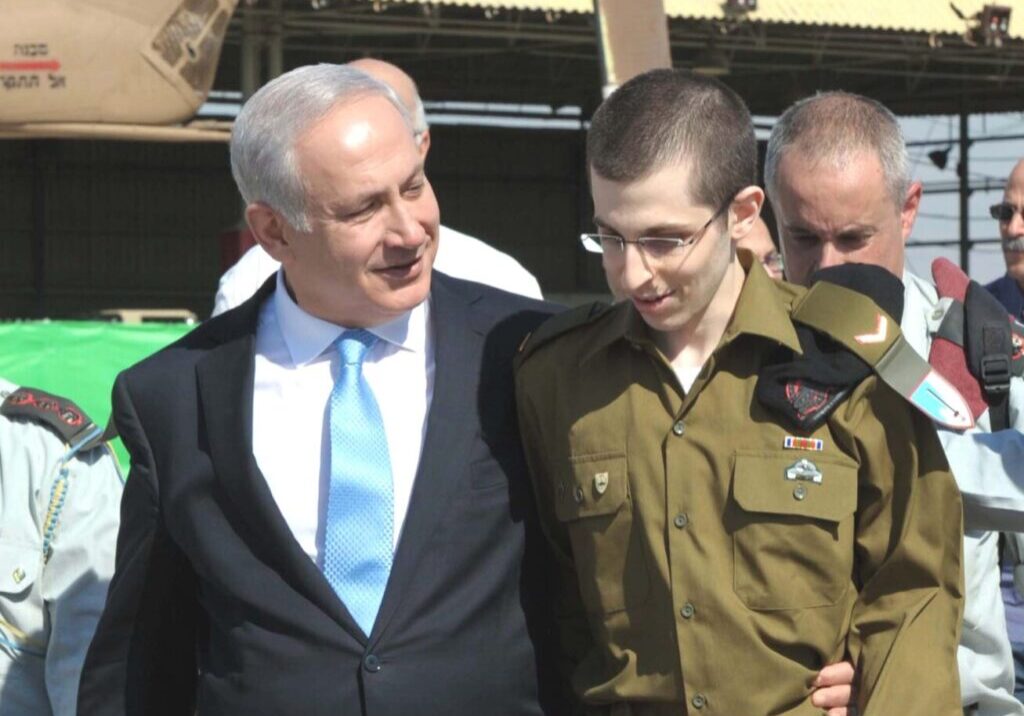
Calls for release of Israeli soldier after 5 years of captivity

Calls for release of Israeli soldier after 5 years of captivity Author: Daniel Meyerowitz-Katz Categories: America, International Jewry, Islamic Extremism, Israel, Palestinians, Updates    

Tomorrow will mark 5 years since kidnapped Israeli soldier Gilad Shalit has been held illegally by Hamas in Gaza. As Isabel Kershner has reported in the New York Times, Hamas has again refused a request from the Red Cross to visit Shalit - so that they could merely ascertain what kind of conditions he is being held in and whether he is alive or dead.

The International Committee of the Red Cross on Thursday publicly demanded that Hamas provide proof that an Israeli soldier captured five years ago and held in Gaza is still alive. Hamas promptly rejected the demand.

AIR
Bold or spineless? Strong conviction or a lack of direction? Responses to Obama's speech

Bold or spineless? Strong conviction or a lack of direction? Responses to Obama's speech Author: Daniel Meyerowitz-Katz Categories: Afghanistan/ Pakistan, America, Media/ Academia, Updates    

Just a few hours after President Obama's recent speech on Afghanistan, there was a wide array of responses, positing a number of theories as to the ramifications of the new US policy.

In general, the focus was on Obama's decision to end the troop surge that he implemented only 18 months ago. Michael Cohen from the American Security Project writes in The Atlantic that Obama was never fully invested in the surge strategy and is now returning to a strategy which is more congruent with his generally dovish stance on foreign policy.

If there is one overriding takeaway from Obama's speech tonight, it is that the same President who 18 months ago was led by his generals into an escalation that he didn't appear to fully support has now taken back control of his policy in Afghanistan.

Australian Parliament raises concern for arrested student Ilan Grapel

Australian Parliament raises concern for arrested student Ilan Grapel Author: Sharyn Mittelman Categories: America, Australasia, Egypt, Israel, Updates    

On 22 June, Federal MP Jamie Briggs (Mayo, Lib.) made a speech in the House of Representatives drawing the Parliament's attention to the arrest in Egypt of American-Israeli Ilan Grapel. Mr. Grapel was arrested earlier this month for alleged involvement in espionage and formenting sectarian strife in Egypt. As Mr Briggs rightly points out: "These allegations at best seem far-fetched and when you consider that Mr Grapel is a regular visitor to the Middle East and had entered Egypt under his own name on his own passport [and] was posting daily messages on Facebook, the allegations do raise significant concern."

Mr Briggs also commented: "This is similar, sadly, to the five year anniversary of the detention of Israeli citizen Gilad Shalit, who has been held by Hamas since 2006."

Breakdown of Obama's Afghanistan announcement

Breakdown of Obama's Afghanistan announcement Author: Daniel Meyerowitz-Katz Categories: Afghanistan/ Pakistan, America, Updates    

As reported recently on this site, US President Barack Obama has just given a landmark speech on the US policy in Afghanistan, including a timetable for the withdrawal of combat troops. The President gave a brief history of the war, concentrating primarily on his December 2009 "troop surge" decision, where he increased the number of US combat troops in Afghanistan by 33,000 in order to counter a resurgent Taliban. As he explained (Transcript via CBS):

...in one of the most difficult decisions that I've made as President, I ordered an additional 30,000 American troops into Afghanistan. When I announced this surge at West Point, we set clear objectives: to refocus on al Qaeda; reverse the Taliban's momentum; and train Afghan Security Forces to defend their own country.

Obama then announced that the surge was successful and will be withdrawn by the end of the year and the combat mission will end by 2014.

Obama confirms Afghanistan troops drawdown Author: Daniel Meyerowitz-Katz Categories: Afghanistan/ Pakistan, America, Middle East, Updates    

After much speculation that the US was gearing-up to pull out of Afghanistan, President Barack Obama has just given an address confirming that the US combat mission in Afghanistan will end by 2014, with the withdrawal beginning this year. He explained that 33,000 troops will be withdrawn by next year, thereby ending the controversial troop surge that is a hallmark of his presidency.

The speech is embedded below and the transcript can be viewed HERE. More on this shortly.

Updates

Editorial: The Indispensable Alliance Author: Colin Rubenstein Categories: America, Israel, Palestinians    

Following a week of dramatic speeches and meetings in Washington featuring US President Barack Obama and Israeli Prime Minister Binyamin Netanyahu, two conclusions have emerged. On the positive side, the United States and Israel alliance, though not always perfect, is strong and enduring. Worryingly, however, prospects for advancing peace between Israel and the Palestinians appears more elusive today than for a very long time.

On May 19, President Obama's major State Department speech outlining US foreign policy in the Middle East focussed primarily on American reactions to the "Arab Spring" sweeping the region, but also reflected US thinking on the Israeli-Palestinian conflict.

A Weighty Week in Washington

A Weighty Week in Washington Author: Amotz Asa-El Categories: America, Israel, Middle East, Palestinians    

Israel has learned in recent weeks that despite the social upheaval and political turbulence across the Middle East, Washington continues to focus on delivering an Israeli-Palestinian peace deal. This is what President Barack Obama made plain to Netanyahu during a meeting May 20 after which the two exchanged carefully phrased but pointed statements of disagreement during a joint appearance in the Oval Office.

Obama's call, both during the meeting and in a speech the previous day, to set the 1967 borders as a basis for future peace talks between Israel and a prospective Palestinian state, prompted Netanyahu to tell Obama, in the media's presence, that the 1967 borders "were boundaries of repeated wars," and that the nine-mile distance at one point between the West Bank and the Mediterranean "is half the width of the Washington beltway."


"Arab Spring" Pessimism/ The Key Middle East trade-off

"Arab Spring" Pessimism/ The Key Middle East trade-off Categories: America, Israel, Middle East, Palestinians, Updates    

While most Middle East observers have felt considerable hope in the wake of the "Arab Spring" mass movements, this has always been mixed with varying degrees of trepidation. Today, some very knowledgeable key analysts are increasingly saying that the trepidation now looks more appropriate than the hope. This Update is devoted to a few of these more cautious and pessimistic views about what is currently occurring across the region.

First up is Professor Barry Rubin, who predicts a major collapse of the Obama Administration's policy hopes for the Middle East in September - not because of the Palestinian unilateral efforts at the UN, but because of the Egyptian elections.  He predicts very a destructive and radical government in Egypt following that poll, and presents a variety of evidence to support his view. He then enumerates a number of dangerous problems he sees arising, and also raises other problematic trends across the region, including in Iran, Syria, Lebanon and Turkey.

1967 "lines", Refugees and President Obama Categories: America, Israel, Palestinians, Updates    

Events in Washington relevant to the Middle East continue apace. Following US President Obama's Middle East policy speech last Thursday, Obama met with Israeli PM Netanyahu on Friday (a video of Netanyahu's remarks is here and a transcript is here, while video of Obama is here) and then spoke to the pro-Israel lobby group AIPAC on Sunday (a text of his remarks is here.) This Update deals with some of the key issues raised by the statements at all three events.

First up is former senior US official Elliot Abrams, who looks at how the AIPAC speech clarified the more controversial elements of the speech on Thursday. He notes the statement on Hamas was clearer, and the words President Obama used on borders was a correction to a mistake on Thursday, where he seemed to be suggesting that Israel could be forced completely back to the 1949 armistice lines if the Palestinians did not choose to agree to land swaps. Abrams notes a contradiction, however, that seemed to continue in the AIPAC speech, a recognition that Israel could not be expected to negotiate with a Palestinian Authority containing an unrepentantly rejectionist Hamas, and yet a demand seemed to be there for Israel to find some way to negotiate.

Reality missing in Obama map

Reality missing in Obama map Author: Colin Rubenstein Categories: America, Israel, Op-eds, Palestinians    

US President Barack Obama's speech outlining US Middle East policy in the wake of the Arab Spring movements was a watershed, detailing US support for reforms and democratisation.

However, its section on Israeli-Palestinian peace efforts unfortunately weakened several important points with flaws that may impede peace prospects.


Obama's Middle East Speech

Obama's Middle East Speech Categories: America, Israel, Middle East, Palestinians, Updates    

As readers are probably aware, US President Barack Obama gave an important speech last night on US Middle East Policy in response to the Arab Spring - which can be read in full here, and can be viewed here. This Update deals with its policy statements across various issue areas as well as their ramifications.

First up is Robert Satloff, director of the Washington Institute for Near East Policy, who discusses the implications of what Obama said particularly with respect to Israeli-Palestinian issues. He is critical of three elements of the speech which go beyond the Clinton parameters for a deal set back in 2000 - his enunciation of the principle that a deal should be "based on the 1967 lines with mutually agreed swaps," a rejection of an Israeli military presence in the Jordan valley in a deal, and "a borders-and-security-first approach, leaving the subjects of refugees and Jerusalem for future negotiations". Satloff points out that these are all US movements toward the Palestinian position - just as the Palestinian Authority had signed a highly destructive agreement with Hamas, and is likely to lead to a rift with Israeli PM Netanyahu, currently due in Washington.


Iran and "Covert Action" Author: Max Boot Categories: America, Iran, Israel    

We're in an era of "covert action." In the US, that phrase went into disrepute in the 1970s, when Congress' Church Committee exposed hare-brained CIA plots to eliminate foreign leaders, such as assassinating Fidel Castro with exploding cigars. President Ford banned assassinations, a chastened CIA cast many veteran officers into the cold, and Congress imposed new limits on covert activities.

Editorial: An overdue US policy reset Author: Colin Rubenstein Categories: America, Israel, Palestinians    

There is no reason to believe that a second moratorium on construction in settlements would have led to a breakthrough. The Palestinian Authority (PA) repeatedly asserted that it would not agree to resume talks for a mere extension of the previous freeze, which ended in September. In that phase, the PA wasted nine months of the ten-month moratorium before even agreeing to talk.

Beyond the Freeze Deal Author: Robert Satloff Categories: America, Israel, Palestinians    

The recent announcement that the US Obama Administration has ended efforts to negotiate a 90-day extension of Israel's moratorium on West Bank settlement construction is more opportunity than embarrassment.

US pulls the plug on settlement moratorium deal Author: AIJAC staff Categories: America, Israel, Palestinians, Updates    

The US government has announced it is no longer seeking a second Israeli moratorium on construction in settlements for 90 days. This is because the administration "concluded that even if Mr. Netanyahu persuaded his cabinet to accept a freeze - which he had not yet been able to do - the 90-day negotiating period would not have produced the progress on core issues that the United States originally had sought."

AIR

US Middle East policy after the mid-term elections Author: AIJAC staff Categories: America, Israel, Middle East, Palestinians, Updates    

As readers will be aware, US mid-term elections last week saw major gains for the Republican party at the expense of US President Barack Obama's Democrats. While the election primarily focussed on domestic political issues, this Update will focus on analysis discussing the effects, if any, of the changed Washington political scene on US Middle East policy.

Updates
Moral Victory

Moral Victory Author: Walter Russell Mead Categories: America, Iraq, Islamic Extremism, Middle East, Terrorism    

And the Sunni Arabs of Iraq made a choice. They saw al-Qaeda at its best - volunteer freedom fighters come from around the world to fight for them - and they saw America at its worst, incompetent, insensitive, vacillating and violent. And they chose the United States. They decided that the future of their families, their children and their values was better served by aligning with the United States against the terrorists and against the fanatics.

The Reset Button Author: Ehud Ya’ari Categories: America, International Security, Iran, Israel, Middle East, Palestinians    

All of a sudden we have seen a different type of meeting between Prime Minister Bibi Netanyahu and Obama. And a major effort on the part of the President, for the first time since his election, to be nice to the Israeli people by giving an interview to an Israeli journalist. They have reached the conclusion that keeping a distance from Israel, picking unnecessary fights with Israel, was not going to advance the peace process. They have reached the conclusion that by distancing themselves from Bibi, from Israel, they are not getting anything in return from the Arab world. And therefore, the change.

How to Support - and Improve - Israel Author: Colin Rubenstein Categories: America, Australasia, International Jewry, Israel, Op-eds    

Julie Szego's column entitled "The Need for a Critical Diaspora" (July 2) placed entirely too much uncritical faith in the arguments of American author and journalist Peter Beinart. She fails to take adequate account of the outcome of the intense and interesting debate that has ensued in America since Beinart's essay, "The Failure of the American Jewish Establishment" was first published in mid-May. In particular, Szego seems unaware that critics have shows that much of the empirical basis of Beinart's key claim is just plain factually wrong.

US Policy and the Peace Process / Talking about Islam and Terrorism Categories: America, Islamic Extremism, Israel, Terrorism, Updates    

This Update features some new analysis of the likely future of the Israeli-Palestinian peace process in the wake of the Obama/Netanyahu summit last week. First up is Washington Institute analyst and former US National Security Council Middle East expert Michael Singh looking at what happens if and when direct Israeli-Palestinian talks resume.

Obama and Bibi Meet in Washington Categories: America, Israel, Updates    

As readers are probably aware, Israeli Prime Minister Binyamin Netanyahu held a much-anticipated meeting at the White House on Tuesday night with US President Barack Obama. This Update looks at the issues discussed and affected by the Summit, and the details of what was said.

Signs of change in US Middle East policy? Author: AIJAC staff Categories: America, Israel, Palestinians, Updates    

Today's Update looks at the contours of American foreign policy in the wake of recent speeches and articles by senior US Middle East experts not especially noted for their pro-Israel views recommending a reappraisal of the global significance of, and best approach to, the Israeli-Palestinian peace process.

Is Washington's Iran policy "confused" Author: AIJAC staff Categories: America, Iran, Updates    

Much debate has been sparked by the revelation in the New York Times last weekend that US Defence Secretary Robert Gates had written a secret memo stating that, in the paper's words, the US lacks "an effective long-range policy for dealing with Iran’s steady progress toward nuclear capability."

From Reconciliation to Recrimination Author: Amotz Asa-El Categories: America, Israel, Palestinians    

The announcement could hardly have been more mistimed. Having first angered Biden it then embarrassed Netanyahu, then threw into a tizzy US-Israeli diplomacy and, while at it, dented what little progress had been made on the peace process.

Editorial: Frustration versus Analysis Author: Colin Rubenstein Categories: America, Israel, Palestinians    

Although the resolution appears very clear, progressing there is desperately, exasperatingly difficult. Unfortunately, the well-meaning but relatively inexperienced Obama Administration has shown a counter-productive tendency to act out of this frustration rather than careful analysis.

AIR

Washington Wash-up Author: AIJAC staff Categories: America, Israel, Updates    

Israeli PM Binyamin Netanyahu spent most of the past week in the US capital but, unlike with many previous visits by Israeli PMs, much of the trip remains the subject of conjecture.

The Latest Crisis and the Obama Administration's approach to Israeli-Palestinian peacemaking Author: AIJAC staff Categories: America, Israel, Palestinians, Updates    

Today's Update focuses on what the crisis generated by the Obama Administration's statements on Israel's building plans in eastern Jerusalem - culminating in three new demands on Israel ostensibly to prove their peacemaking bona fides - seem to indicate about the Administration's approach to Middle East peacemaking.

Updates

Essay: The Great Satan Myth Author: Abbas Milani Categories: America, Iran    

The Iranian regime has never found itself more vulnerable. And, with this vulnerability, it has never leaned more heavily on its own narrative of history. This narrative, of course, has a central antagonist, a character conjured as the "Great Satan".

At an impasse? Author: Robert Satloff Categories: America, Israel, Palestinians    

How is it possible that a US administration that came to office committed to the pursuit of Arab-Israeli peacemaking is today further from even getting the parties to talk with each other than at almost any point since the peace process began at the Madrid conference more than 18 years ago?

A change in Washington Author: AIJAC staff Categories: America, Israel, Palestinians, Updates    

Today's Update looks at the lay of the land in US, Israel and the Palestinian Authority relations following last week's photo op between US President Barack Obama, Israeli Prime Minister Binyamin Netanyahu and Palestinian Authority President Mahmoud Abbas on the sidelines of the United Nations General Assembly.

Scribblings: Reductio ad Absurdum Author: Tzvi Fleischer Categories: America, Israel, Middle East, Palestinians    

So the US position comes down to this: the Israeli government must actively discriminate against Jews, including non-Israeli Jews, when it comes to making decisions about private building permits in all of east Jerusalem - more than half of Israel's capital - even when this could have no conceivable effect on future Palestinian claims in the area during peace negotiations.

Settlement Freeze Tag Author: Michael Doran Categories: America, Israel, Palestinians    

American presidents have been trying to solve the Arab-Israeli conflict since the days of Truman. Sooner or later, every one of them has learned a harsh lesson about the limits of American influence.

AIR Updates

Obama's challenge in the Arab and Muslim worlds Author: AIJAC staff Categories: America, Middle East, Updates    

Today's Update offers some additional analysis of the regional environment US President Obama must try to influence in his planned speech in Cairo tonight (Australian time). An interview Obama did with Thomas Friedman of the New York Times apparently reveals some of his own thoughts on the subject.

When Bibi Met Barack Author: Herb Keinon Categories: America, Israel, Middle East    

When the dust settles, what will likely be remembered from Netanyahu's maiden trip to the US in his second term as prime minister is that the talks led neither to a breakdown of relations with the US, nor a breakthrough in Middle East diplomacy.

Bibi Meets Barack Author: AIJAC staff Categories: America, Israel, Updates    

As this Update went out, news was coming in from Washington with respect to the Barack Obama-Binyamin Netanyahu meetings that took place on Monday, May 18.

Hope of peace in Gaza remains Author: Colin Rubenstein Categories: America, Israel, Op-eds    

Is the new Netanyahu Government likely to be headed for a major confrontation with the Obama Administration? The argument often made is that while Barack Obama will push hard for Israeli-Palestinian progress, the supposedly "hard-line" Netanyahu Government does not even support a two-state resolution to the conflict.

Washington and Teheran Author: AIJAC staff Categories: Afghanistan/ Pakistan, America, Iran, Updates    

This Update adds more on Washington's possible policy toward Iran, as th Obama Administration pursues engagement, at a time when both the US Congress and the Israeli government are attempting to maximise the leverage the US President will have.

Editorial: Washington and Jerusalem Author: Colin Rubenstein Categories: America, Israel    

President Obama has reportedly said he wishes to begin renewing peace progress by asking for a series of "concrete steps" as reciprocal "confidence-building measures". This is potentially fully congruent with Netanyahu's approach - especially in terms of his concentration on "reciprocity"

Scribblings: Indyk-ations Author: Tzvi Fleischer Categories: America, Iraq, Israel, Middle East, Palestinians    

As readers may recall, the AIR published a review in March of Innocent Abroad: An Intimate Account of American Peace Diplomacy in The Middle East, by Dr. Martin Indyk... Having now read the book myself, I agree with most of what reviewer Jonathan Schanzer had to say

AIR

Bibi and Barack Can Unite Author: Yossi Klein Halevi Categories: America, Israel    

In Washington, a new president is reaching out to the Muslim world, including Iran. In Jerusalem, the new government represents the disillusionment of the Israeli public with 15 years of failed peace talks.

Editorial: The Rules of Engagement Author: Colin Rubenstein Categories: America, Iran, Israel    

First, it's important to note – as demonstrated by the West's attempts to improve relations with Iran under Khatami – that Obama's approach is not actually a new policy. To the contrary, for the past 30 years every US administration has tried to use diplomacy and "engagement" to resolve the West's conflicts with Iran

Updates

An Israeli-Palestinian agenda for Obama Author: Adam Frey Categories: America, Israel, Palestinians    

Before his inauguration, US President Barack Obama promised that his administration would be engaged in the Middle East peace process from "day one". Because he is venerated in Europe and the Arab world for being perceived as fundamentally different from previous President George W. Bush, but has also appointed people trusted by Israel to some key Middle East roles, many believe Obama is particularly well positioned to advance Israeli-Palestinian peace.

Obama's Options Author: David Makovsky Categories: America, Israel, Palestinians    

When it comes to the Arab-Israeli conflict, a strategy of "engagement without illusions" will most likely drive the Obama Administration. Prospects of diplomatic success are worth trying, but at a minimum, engagement would attempt to reverse the slide toward radicalisation.

How to Put the Squeeze on Iran Author: Orde F. Kittrie Categories: America, Iran    

If Barack Obama is to persuade Iran to negotiate away its illegal nuclear weapons program, he will first need to generate more leverage than what the Bush Administration is leaving him with.

Scribblings: The Talking Cure Author: Tzvi Fleischer Categories: America, Iran, Iraq, Middle East    

US President-elect Barack Obama is going to change US policy toward Iran and end the Bush Administration approach of refusing to directly engage Teheran diplomatically, right? Actually, things are not nearly so cut and dried as this conventional wisdom holds.

AIR

Editorial: Election Fever Author: Colin Rubenstein Categories: America, Iraq, Israel, Middle East    

Whether the person inaugurated in Washington is Senator Barack Obama or Senator John McCain, and whoever emerges as prime minister in Israel, it is already clear that the new leadership in each country will immediately face a myriad of challenges.

Updates

Essay: The Iranian Nuclear Challenge Author: Bipartisan Policy Center Categories: America, International Security, Iran    

A nuclear weapons-capable Islamic Republic of Iran is strategically untenable. This report is about preventing the untenable. While a peaceful, civilian nuclear program in Iran might be acceptable under certain conditions... it is the decided judgment of this group that continued Iranian enrichment of uranium... threatens US and global security, regional stability, and the international nonproliferation regime.

Iraq, post-Petraeus, post-Surge Author: AIJAC staff Categories: America, Iraq, Updates    

Today, we offer some pieces on the state of Iraq as the US Commander there, Gen. David Petraeus, this week handed over to his deputy and successor, Gen. Raymond Odierno, and a new book by Washington journalist Bob Woodward revealed new details about the White House and Pentagon decision-making that led to the successful "surge" change in strategy adopted under Petraeus in 2006.

Alexander Downer speech to American Jewish Committee upon receiving the Ramer Award for Excellence in Diplomacy, Washington D.C. Categories: America, Australasia, Europe, International Jewry, Israel, Speeches    

The Australian and American Jewish communities have a lot in common. In both cases Jews have found in our countries the peace and tolerance which was denied them over the centuries in Europe and the Middle East: but they have not only found freedom and tolerance in Australia and America, they have contributed mightily to our two societies.

AIR

Year of Decision? Author: David Makovsky Categories: America, Israel, Palestinians    

US President George W. Bush's recent visit to Israel and the Palestinian territories came six weeks after the Middle East peace conference in Annapolis. That parley marked the first time the United States did not mandate a purely sequential approach to the peace process.

Updates

Nukes or not, Iran remains a threat Author: Bren Carlill Categories: America, Iran, Op-eds    

AMERICAN intelligence agencies believe Iran has halted its nuclear weapons program. Since an Iranian nuclear bomb would risk destabilising the entire Middle East, this sounds like great news. But it's worth looking beyond the headlines.

Annapolis: Joint Understanding of Negotiations - 2007

Annapolis: Joint Understanding of Negotiations - 2007 Categories: America, Documents, Israel, Palestinians    

The representatives of the Government of the State of Israel and the Palestine Liberation Organisation (PLO), represented respectively by Prime Minister Ehud Olmert and President Mahmoud Abbas, in his capacity as Chairman of the PLO Executive Committee and President of the Palestinian Authority, have convened in Annapolis, Maryland, under the auspices of President George W. Bush of the United States of America, and with the support of the participants of this international conference, having concluded the following Joint Understanding

Primary Colours Author: Adam Frey Categories: America, Iraq, Middle East    

Though the US presidential election is still a year away, the Democratic and Republican primary campaigns have been in full swing for some time. And, owing to a new and severely front-loaded primary schedule beginning in January, the parties may know their nominee by mid-February.

The Biblio File: The Usual Suspect Author: Jeffery Goldberg Categories: America, Iraq, Middle East    

The villains in The Israel Lobby and US Foreign Policy are almost entirely Jewish. Many of the chapters of the book contain extensive lists of Jews (even Rothschilds) who, the authors claim, act against the best interests of the United States. And act effectively: the Israel lobby in this book is an invincible juggernaut.

AIR
The Return of the Mediator

The Return of the Mediator Author: Tzvi Fleischer Categories: America, Iran, Iraq, Israel, Middle East, Palestinians    

The Review spoke to Ambassador Dennis Ross in May 2001, a bare six months after he was a central player in the US Clinton Administrations last-ditch attempt to create an Israeli-Palestinian peace in December 2000. At the time, he remained the unflappable diplomats diplomat, controlled and punctilious in speech.

Biblio File: Power and Partnership Author: David Kemp Categories: America, Australasia    

This book should change the terms in which Australia?s alliance with the United States is publicly debated in this country. Its most important claim, from the standpoint of an Australian, is that the US-Australian alliance empowers Australia.

Updates

AMIA Revisited Author: Colin Rubenstein Categories: America, Europe, International Jewry, Iran, Terrorism    

On November 9, there was an extraordinary development in an 11-year old case of terrorist mass murder. Argentina finally identified and named the Lebanese Hezbollah member, Ibrahim Hussein Berro, allegedly responsible for the suicide bombing of the Argentine Israelite Mutual Aid Association (AMIA) Jewish community centre in Buenos Aires in July 1994.

Editorial: The ISG?s Unrealism Author: Colin Rubenstein Categories: America, Iraq, Middle East    

The bipartisan Iraq Survey Group (ISG) report to US President Bush set out the grim reality of the situation in Iraq and made some plausible, even if predictable and contested, recommendations about military strategy there. However it also includes two recommendations about wider Middle Eastern policy that are fundamentally flawed.

The ISG Unplugged Author: Eliot Cohen Categories: America, Iraq, Middle East    

The theory of the thing is very peculiar indeed. You are in the middle of a war - a hard war, a war that is going badly. If the government has bogged down, if the people inside have gone stale, you would say that the sound thing ... would be, first, to fire a bunch of officials (generals as well as top civilians), promote or bring in fresh talent, and put together a small group of people to take a new and unillusioned look.

Too high a price for peace Author: Colin Rubenstein Categories: America, Iran, Iraq, Middle East, Op-eds, Syria    

The bipartisan Iraq Survey Group report to US President George Bush makes some reasonable if unsurprising recommendations about military strategy in Iraq, but also two recommendations about wider Middle Eastern policy that are fundamentally flawed.

AIR

The Opportunity Author: External author Categories: America, Israel, Palestinians    

After four-and-a-half years of terror and violence, the proverbial stars seem to be aligned for a new push for peace between the Israelis and the Palestinians. Unlike his predecessor, the newly elected Palestinian Authority (PA) president, Mahmoud Abbas, stresses the importance of peaceful problem solving and has condemned suicide bombing (in Arabic and in English) as counterproductive. On the Israeli side, Prime Minister Ariel Sharon, the one-time architect of the settlement movement, is leading the drive to evacuate all settlers from Gaza and the northern West Bank. At Sharm-el-Sheikh earlier this year, he and Abbas committed to a cease-fire, an important step even if rejectionists on both sides are certain to try to exploit it. In Washington, meanwhile, Condoleezza Rice is as close to the Commander in Chief as any Secretary of State has been since James Baker teamed up with George W. Bush's father, guaranteeing that she speaks with the president's authority.

Media Microscope: Poll-er Opposites Author: Jamie Hyams Categories: America, Australasia, International Security, Media/ Academia    

The term "gigo" (garbage in, garbage out) was invented by computer scientists in the 1950s. Back then, the term was another addition to the growing vocabulary of the computer industry. Yet, according to critics, this unusual acronym could just as easily be applied to the findings of the heavily-publicised Lowy Institute poll, which was published on March 28.

If not now, when? Author: External author Categories: America, Iran    

In his January 20, 2005, inaugural speech, President George W. Bush declared, "America will not pretend that jailed dissidents prefer their chains, or that women welcome humiliation and servitude."

Updates

Essay: The Right Questions Author: AIJAC External authors Categories: America, Terrorism    

It didn't take long for interrogators in the war on terror to realise that their part was not going according to script. Pentagon doctrine, honed over decades of cold-war planning, held that 95 percent of prisoners would break upon straightforward questioning.

Looking Ahead Author: External author Categories: America, Iraq, Middle East    

The outlines of the second Bush Administration's approach to the Middle East began emerging from an American-Israel dialogue held in Washington in early December.

No Joke Author: External author Categories: America    

LaRouche, 82, is glowering behind outsize eyeglasses. His hair is wispy on his prominent head. His shoulders stoop. Yet he still projects supreme self-assurance.

Sharon-Bush Exchange of Letters - 2004 Categories: America, Israel, Palestinians    

Israel is committed to the peace process, and aspires to reach a mutual agreement on the basis of two states for two peoples, the State of Israel as the state of the Jewish people and a Palestinian state for the Palestinian people, as part of the realisation of President [George W.] Bush's vision.